

If your lower back twinges every time you stand up, or a sharp ache shoots through your hip or pelvis as your bump grows, you are not alone, and you are not doing anything wrong. Aches in the back, hips, and pelvis are one of the most common parts of pregnancy, and most of them are uncomfortable rather than dangerous. The good news is that gentle, drug-free help is available. Traditional Chinese Medicine (TCM) has long been used to ease these everyday aches, and when it is paired with your regular antenatal care, it can make the nine months far more comfortable. This guide explains why these aches happen at each stage, and what you can safely do about them. For more on looking after yourself while expecting, see our pregnancy care guide.
Why your back, hips, and pelvis ache in pregnancy
Pregnancy aches are not a sign that something is wrong. They are mostly your body adapting to carry and birth your baby. A few changes work together to put extra strain on your lower half.
What changes in your body
- Hormones loosen your joints. A hormone called relaxin softens the ligaments around your pelvis so your body can open up for birth. The trade-off is that your joints feel less stable and can ache.
- Your bump shifts your balance. As your belly grows, your centre of gravity moves forward. You naturally lean back to compensate, which strains the muscles along your lower back.
- You are carrying extra weight. More weight, often gained quickly, means more load on your spine, hips, and pelvic joints.
- Posture and sleep change. Standing, sitting, and sleeping differently can leave muscles tight and sore.
Where the aches tend to show up
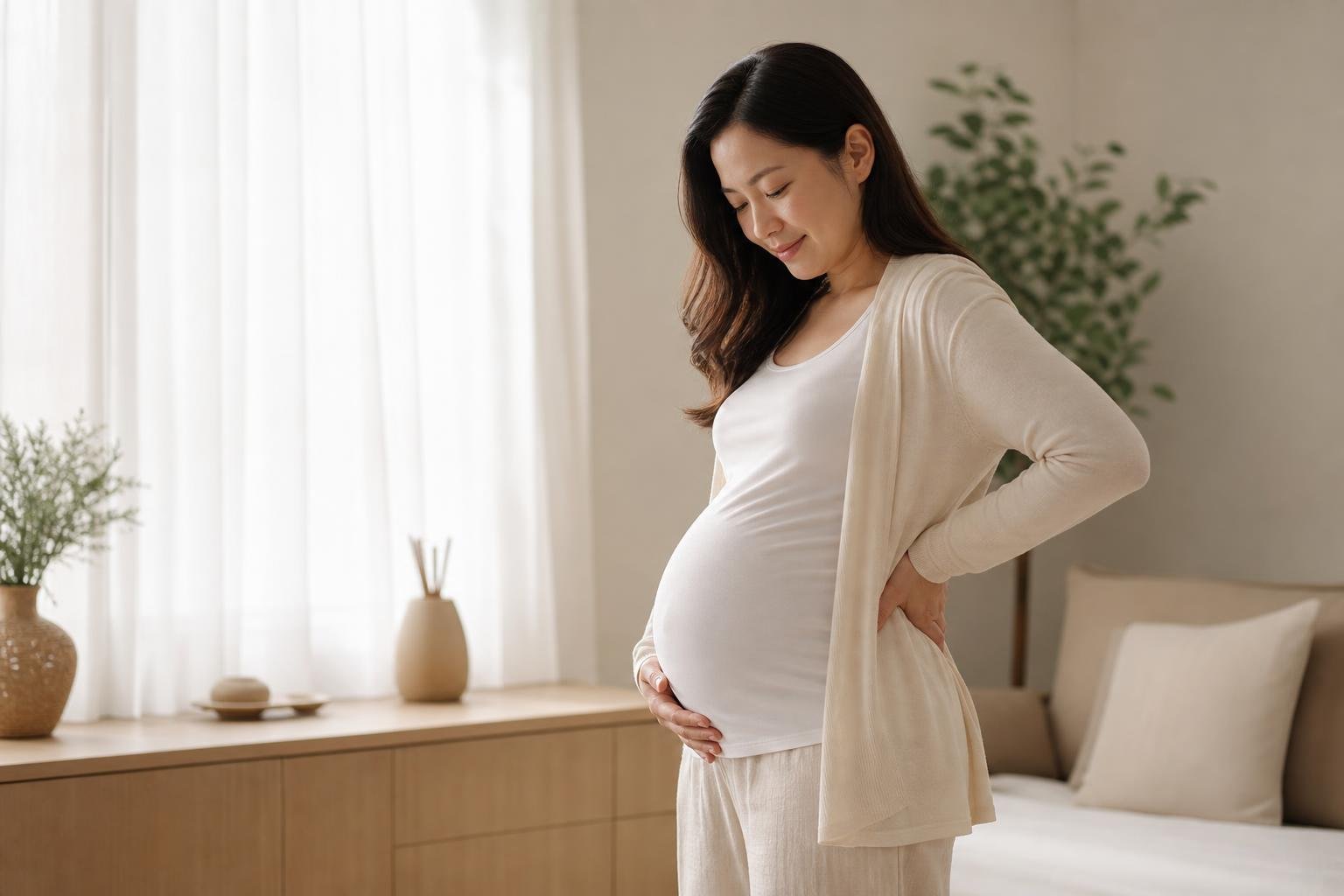
- Lower back pain: a dull ache or stiffness across the lower back, often worse after standing or sitting for a long time.
- Hip pain: soreness deep in the hip or buttock, sometimes worse lying on one side at night.
- Pelvic pain: pain at the front or back of the pelvis, often called PGP, which stands for pelvic girdle pain. It can sting when you climb stairs, turn in bed, or stand on one leg to dress.
- Sciatica: a sharp or burning pain that travels from your lower back or buttock down the back of one leg, caused by pressure on the sciatic nerve.
Knowing which kind of ache you have helps your physician choose the gentlest, most useful treatment for you.

How TCM eases pregnancy aches safely
TCM offers several gentle, drug-free ways to ease musculoskeletal aches, which simply means aches in the muscles, joints, and ligaments. A registered TCM physician will tailor everything to how far along you are and where it hurts. Our pregnancy pain management service is built around exactly these complaints.
Acupuncture
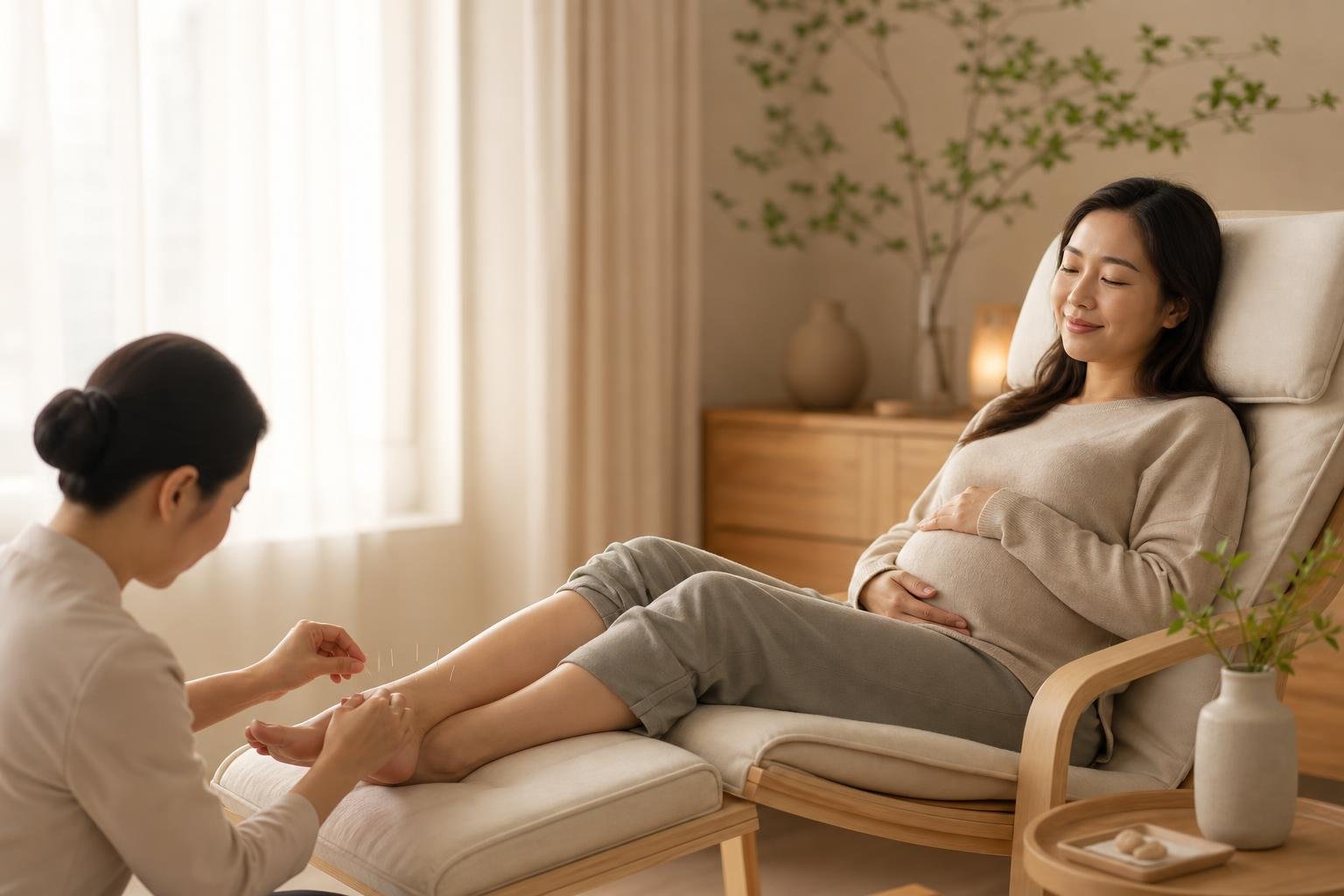
Acupuncture uses very fine needles, far thinner than the ones used for injections, placed at points that help relax tight muscles and calm aching nerves. Most mums feel only a tiny prick, then rest comfortably for 20 to 30 minutes. Done by a trained physician who knows you are pregnant, it is gentle and low-risk. A handful of points are traditionally avoided until you are full-term, which is one more reason to see a professional rather than try anything yourself.
Tui na and prenatal massage
Tui na, a Chinese therapeutic massage, uses guided pressure and kneading to loosen tight muscles around the back and hips and ease the pull on sore joints. During pregnancy it is adapted to be soft and safe, with you positioned on your side or propped up rather than lying flat on your tummy. If you prefer a soothing, full-body version, our prenatal massage is designed for mums-to-be, and you can read how it changes stage by stage in our guide to prenatal massage by trimester.
Acupressure and heat
Acupressure, firm finger pressure on points instead of needles, can be taught to you or your partner for gentle relief at home. Warmth helps too: a warm (not hot) pack on the lower back or hip can relax tight muscles. Your physician may also use moxibustion, the gentle warming of certain points, during a session. Always ask which points are safe for you, because some are best left alone in pregnancy.
Pregnancy aches trimester by trimester
Aches change as your pregnancy moves along. Here is what tends to come up in each stage and how TCM and self-care can help.
First trimester (weeks 1 to 12)
Serious back and pelvic pain is less common this early, but mild lower-back stiffness and tiredness-related aches do happen as hormones start to shift. This is also when nausea and fatigue take centre stage. Physicians keep treatment especially light in these early weeks. Gentle acupressure, light stretching, and good posture are usually enough. If you have any cramping with bleeding, or a history of miscarriage, tell your physician and your doctor straight away before any treatment.
Second trimester (weeks 13 to 27)
Many mums feel more energetic now, but as the bump grows, lower-back, hip, and early pelvic aches often begin. This is a comfortable and popular stretch for supportive care. Gentle acupuncture and adapted tui na can ease the new strain, and it is a good time to learn safe self-care habits before the heavier final months. A therapist will position you carefully on your side for comfort and safe blood flow.
Third trimester (weeks 28 to 40)
This is when back, hip, and pelvic pain peak for most mums. The extra weight, looser joints, and the baby’s position can make turning in bed, walking, and climbing stairs uncomfortable. Sciatica and PGP are common now. Gentle acupuncture, tui na, warmth, and acupressure can all help take the edge off, often alongside a supportive pelvic belt and rest. Treatments stay soft and short, and your physician will avoid any points reserved for labour until you are full-term.

Safe self-care for everyday aches
Small daily habits make a real difference. Between treatments, try these gentle, mum-friendly tips:
- Move little and often. Short walks and gentle stretches keep stiffness away better than long rest.
- Mind your posture. Stand tall, avoid locking your knees, and sit with your back supported and feet flat.
- Sleep on your side. Place a pillow between your knees and one under your bump to keep your hips level.
- Use warmth, not heat. A warm pack on the lower back or hip can soothe tight muscles. Keep it warm rather than hot, and avoid placing it on your belly.
- Take the strain off your pelvis. Keep your knees together when turning in bed or getting out of a car, and avoid standing on one leg to dress.
- Wear supportive shoes and consider a maternity support belt if your physician or physio suggests one.
One safety note: do not press firmly on acupressure points yourself unless your physician has shown you which ones are safe. Some points are best avoided in pregnancy, so when in doubt, leave the deeper work to a professional.
When to see a doctor
Most pregnancy aches are uncomfortable but harmless. Some symptoms, though, need medical attention rather than massage or acupuncture. Contact your doctor or go to hospital if you have:
- Severe or sudden back or tummy pain, or pain that does not ease with rest.
- Pain together with vaginal bleeding or unusual discharge.
- Regular tightening or cramping before 37 weeks, which could be a sign of pre-term labour.
- A fever, chills, or pain or burning when you pass urine.
- Numbness, weakness, or pins and needles in your legs, or trouble controlling your bladder or bowels.
- Pelvic pain so bad you can barely walk or turn over. Severe PGP often needs a women’s health physiotherapist as well.
TCM eases comfort and muscle aches; it is a complement to your antenatal care, not a replacement for it. When something feels wrong, get checked first, then come back to gentle treatment once your doctor says all is well.
Frequently asked questions
Does TCM help with pregnancy back pain?
Many mums find that gentle acupuncture, tui na massage, acupressure, and warmth ease back, hip, and pelvic aches. TCM for pregnancy back pain works best as a supportive comfort measure alongside your regular antenatal care.
Is acupuncture safe for back and hip pain in pregnancy?
For most mums, yes, when it is done by a trained physician who avoids the points reserved for labour. Always say how many weeks pregnant you are before a session.
Can TCM help with sciatica or pelvic girdle pain?
Gentle treatment can ease the muscle tension that adds to sciatica and PGP. Severe pelvic girdle pain may also need a women’s health physiotherapist, so ask your doctor if you are struggling to walk.
When can I start treatment for pregnancy aches?
You can seek help at any stage. Many mums start in the second or third trimester when aches build, but tell your physician how far along you are so care can be kept light and safe early on.
Can I use a heat pack for back pain while pregnant?
A warm (not hot) pack on the lower back or hip is generally fine and soothing. Keep it off your belly, and check with your doctor if you are unsure.
Is it too late to start in the third trimester?
No. The final months are when many mums seek help for back, hip, and pelvic pain. Gentle treatment can still bring real comfort right up to your due date.
Aching back, sore hips, or a tender pelvis getting in the way of enjoying your pregnancy? Our physicians treat mums-to-be every day and will work gently and within safe limits. Explore our pregnancy pain management service, and lean on us for caring, drug-free relief through every trimester.