
If you are pregnant and wondering whether it is safe to take Chinese herbs during pregnancy, you are asking exactly the right question. The honest answer is: some herbs can be helpful and safe, but only when they are chosen and prescribed for you by a registered Traditional Chinese Medicine (TCM) physician who knows you are expecting. Herbs are the part of TCM that needs the most care in pregnancy, far more than acupuncture or diet advice. For how herbs sit alongside acupuncture, diet and the rest of pregnancy care, see our overview of Chinese medicine for pregnancy. This guide explains, in plain language, which kinds of herbs tend to be used, which are avoided, how to buy them safely, and the cautions that change from one trimester to the next. For the bigger picture of looking after yourself while expecting, see our pregnancy care guide.
Are Chinese herbs safe during pregnancy?
There is no single yes or no, because “Chinese herbs” is not one product. It covers hundreds of plants, roots, seeds, and other ingredients, each with a different effect on the body. Some are gentle and nourishing. A few are strong enough that they are deliberately kept away from pregnant mums. The safety depends entirely on which herbs, in what amounts, mixed into what formula (a formula is a mix of herbs prescribed together to work as one), and for which person.
This is why you cannot judge a herb safe just because it is “natural” or because a friend took it and was fine. Pregnancy changes how your body responds, and what suited someone else may not suit you. The good news is that a trained physician does this assessment for a living and will always err on the side of caution for a mum-to-be.
Why herbs need more care than other parts of TCM
Acupuncture and gentle massage act on the outside of the body and are easy to adjust point by point. Herbs are different: once you swallow them, they work from the inside, and the effect is harder to take back. That is why physicians are stricter with herbs than with anything else during pregnancy, and why this guide keeps coming back to one message: let your physician decide.
The one rule that keeps herbs safe: your physician decides
If you remember only one thing from this article, make it this: never self-prescribe Chinese herbs while pregnant. Only take herbs that a registered TCM physician has prescribed for you, knowing your stage of pregnancy and your full health history. Everything else in this guide sits underneath that single rule.
Why self-prescribing is so risky
Buying herbs yourself feels harmless, but it carries real risks during pregnancy:
- You cannot tell a safe herb from an avoided one by looking at it. Many look and smell similar.
- Formulas are balanced. A herb that is fine in one mix can be a problem in another, or in the wrong amount.
- Shop staff are not your physician. A well-meaning recommendation over the counter does not account for your pregnancy or your medical history.
- Unlabelled products may contain anything, including ingredients that should never be taken while expecting.
A physician removes all of this guesswork. They select herbs that suit your body, leave out the ones that are unsafe for pregnancy, and adjust the formula as your pregnancy moves along.
Tell both your doctor and your physician
Your care should be joined up. Tell your TCM physician about any medicines, supplements, and vitamins you take, and tell your gynae or doctor about any herbs you are prescribed. This lets both teams check that nothing clashes. If your pregnancy is high-risk or closely monitored, check with your doctor before starting any herbs at all. Keeping everyone informed is the simplest way to stay safe.
Which herbs tend to be used, and which are avoided
You do not need to memorise herb names. It is more useful to understand the broad categories, so you can follow what your physician is doing and ask sensible questions.
Gentle, nourishing herbs often considered in pregnancy
Pregnancy-friendly herbs tend to be tonifying, which in TCM means nourishing and strengthening rather than stimulating. They are used to support energy, blood, and digestion gently. Some everyday examples that come up often:
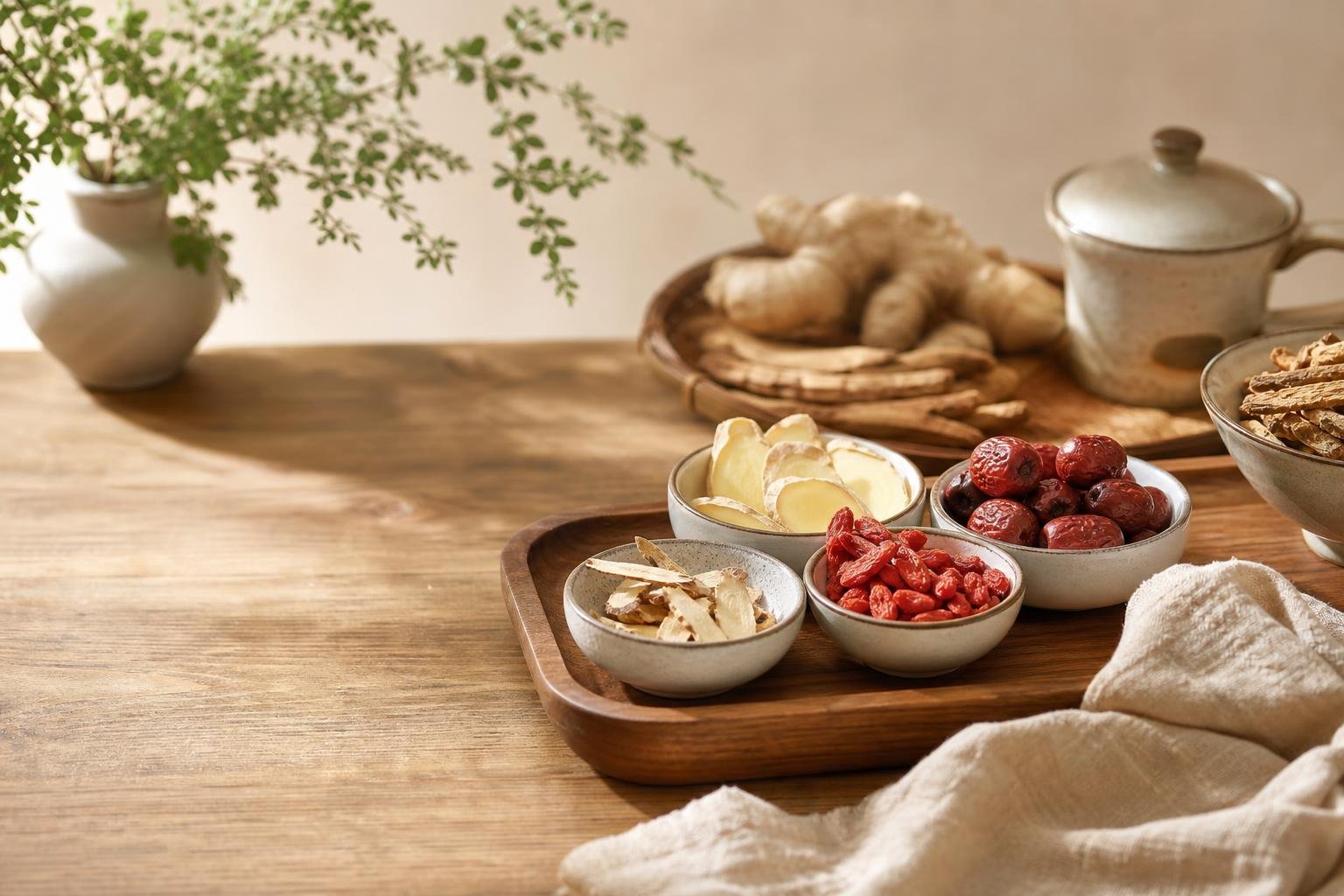
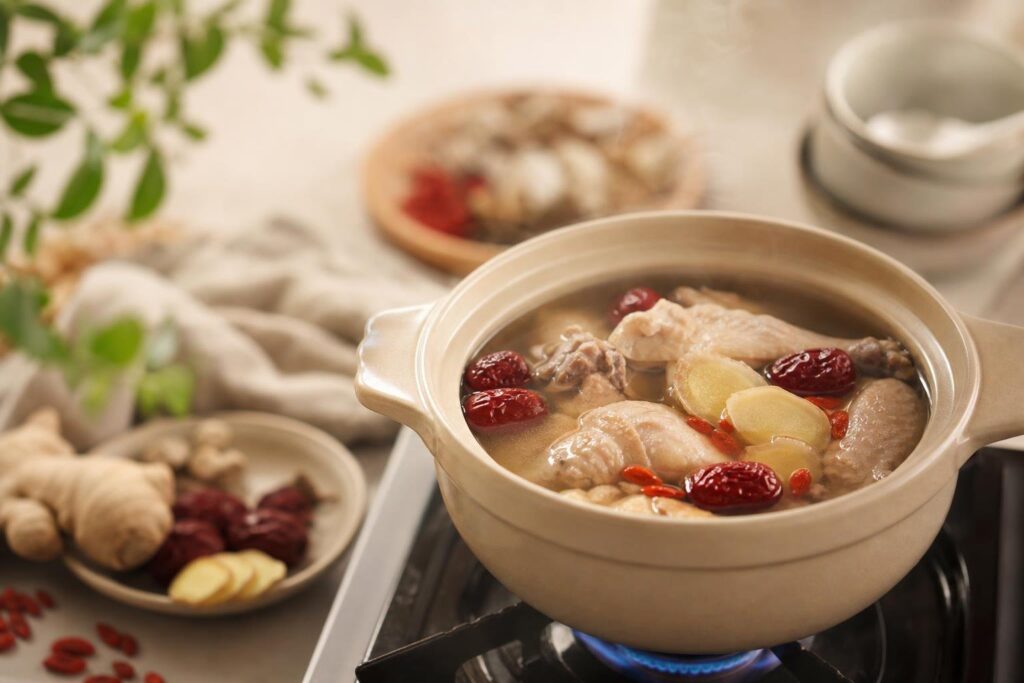
- Ginger is commonly used in small culinary amounts to settle nausea, which is why ginger tea is a familiar home comfort.
- Red dates (jujube) are a mild, food-like tonic many families already cook with in soups.
- Other gentle tonifying foods and herbs may be suggested to support energy and digestion, always matched to your body.
Even with mild, food-like ingredients, let your physician guide the amounts and timing. “Food-like” does not automatically mean “take as much as you like” when you are pregnant.
Herbs that are generally avoided
Some categories are kept away from pregnant mums because they are too strong or act in ways that are unhelpful during pregnancy:
- Blood-invigorating or “moving” herbs, which boost circulation. These are generally avoided in pregnancy because of their strong moving effect.
- Strongly purgative herbs, which force the bowels or are very draining.
- Herbs considered toxic or harsh, which a physician keeps out of any pregnancy formula.
If you are ever unsure whether a particular herb is safe, do not guess and do not take it. The only reliable answer is an assessment by a registered physician who knows you are pregnant.
Herbal cautions by trimester
Pregnancy is not one phase, and the level of caution shifts as you go. Your physician adjusts accordingly, but here is the general picture.
First trimester (weeks 1 to 12)
The early weeks call for the most caution, because the pregnancy is still settling. Physicians tend to keep herbs light or hold off on stronger formulas, leaning instead on gentle support for nausea and tiredness. Acupuncture and acupressure are often preferred here for morning sickness. If you have ever had a miscarriage or notice any bleeding, tell your physician and your doctor straight away. Our first-trimester survival guide covers gentle ways to cope with early nausea.
Second trimester (weeks 13 to 27)
Many mums feel steadier now, and this is often a more comfortable window for supportive care if your physician feels it is needed. Any herbs remain carefully chosen and kept gentle. This is also a good time to raise aches and digestion concerns, which TCM often supports with treatment and diet rather than strong herbs.
Third trimester and near birth (weeks 28 onwards)
Late pregnancy brings its own cautions. Some herbs and treatments are reserved for full-term only, because of their effect on the body as birth approaches. This is exactly why timing matters and why a DIY approach is unsafe. Always tell your physician how many weeks along you are at every visit, so the plan stays right for your stage.
Buying and taking herbs safely
Where to buy
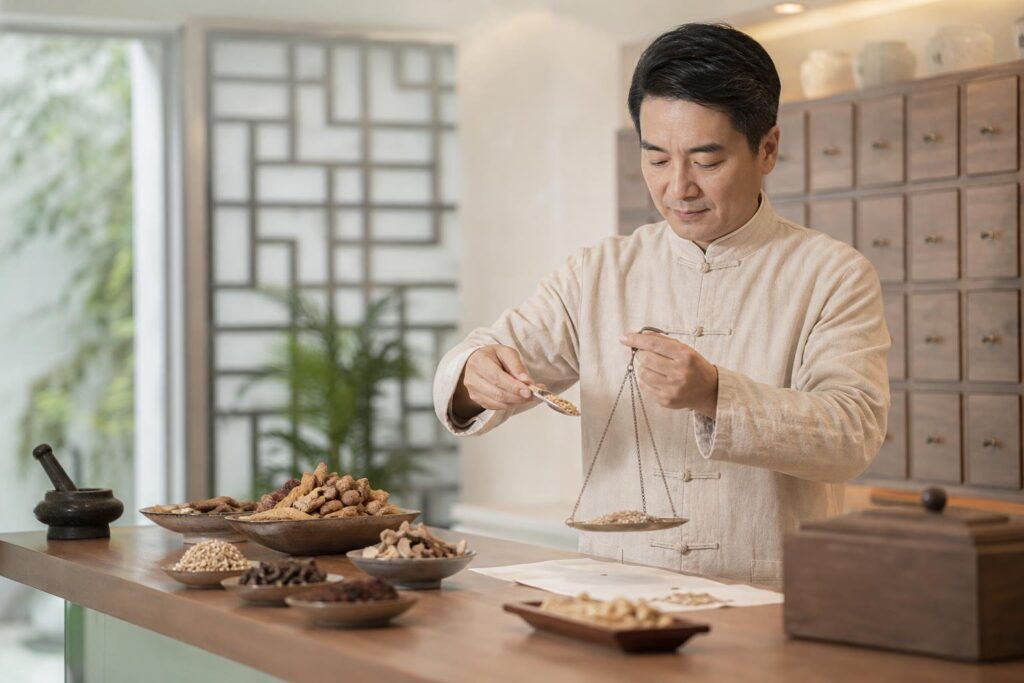
Only get pregnancy herbs from a reputable clinic or pharmacy, ideally the one where your physician practises. This way the herbs are properly sourced, correctly identified, and dispensed against a prescription made for you. Avoid buying loose herbs or tonics from unfamiliar online sellers, markets, or social media shops, where you cannot be sure what you are getting.
This matters even more in pregnancy, since you cannot tell a safe herb from an unsafe one just by looking at it. At Lao Niang TCM, every herb prescribed goes through a careful quality process before it reaches you:
- Traced to source. Each herb’s origin is verified, grown on geographically isolated, pollution-free farmland.
- Meets HSA requirements, plus additional testing. Lao Niang TCM herbs meet Singapore’s HSA requirements for toxic heavy metals, and undergo additional in-house testing for pesticide residues, impurities, and active compound levels in every batch.
- No preservatives or sulphur fumigation. Herbs are kept refrigerated instead, to preserve freshness without chemical treatment.
- Hand-harvested at peak potency. Herbs are picked and processed at the optimal time for maximum effectiveness.
For a pregnant mum, that kind of traceability is not a nice-to-have; it is part of what makes a prescribed formula something you can actually trust.
The forms herbs come in
Prescribed herbs usually come in one of two forms, and your physician will explain how to take whichever you are given:
- Decoction: raw herbs you simmer in water at home to make a tea.
- Granules: dried herb extract you simply dissolve in warm water, which is more convenient.
Whichever form you receive, follow the instructions exactly, do not double up doses, and tell your physician if anything feels off so they can adjust.
Always avoid this list
No matter how tempting or how heavily marketed, steer clear of these while pregnant:
- Self-prescribing any herb, or taking someone else’s formula, even a relative’s.
- Unlabelled tonics where you cannot see exactly what is inside.
- Slimming, “detox”, or cleansing teas, which are often draining and never suitable in pregnancy.
- Imported or online products with unclear ingredients or no proper labelling.
Fertility herbs versus pregnancy herbs: not the same thing
This trips up many mums, so it is worth being clear. Herbs used before pregnancy to help with conceiving are a different matter from herbs used during an established pregnancy. Pre-conception support is about preparing the body to conceive, and some of those approaches are not suitable once you are actually pregnant. If you were on herbs as part of natural fertility support and have now had a positive test, stop and check with your physician before continuing anything. The moment you are pregnant, the rules change, and your formula should be reviewed for your new stage.
Frequently asked questions
Can I buy Chinese herbs myself while pregnant?
No. Please do not buy or take herbs on your own while pregnant. Only take herbs prescribed for you by a registered TCM physician who knows you are expecting, and buy them from a reputable clinic or pharmacy. Self-prescribing is the main risk this guide warns against.
Is ginger safe for morning sickness in pregnancy?
Ginger in small culinary amounts, such as ginger tea, is a familiar comfort many mums use for nausea. Even so, mention it to your physician, especially if you want to use it regularly or in larger amounts, so it fits your overall care.
Are “natural” herbs automatically safe because they are not drugs?
No. Natural does not mean safe in pregnancy. Some plants are strong enough to be deliberately avoided while expecting. Safety depends on the specific herb, the amount, and your body, which is why a physician’s assessment matters.
Can I keep taking the fertility herbs I was on before I got pregnant?
Not without checking first. Pre-conception herbs are not always suitable once you are pregnant. Stop and ask your physician to review everything now that you have a positive test.
Can I take Chinese herbs alongside my prescribed medicine?
Often yes, but only with both teams informed. Tell your physician about your medicines and your doctor about your herbs, so nothing clashes. If your pregnancy is high-risk, check with your doctor before starting herbs.
What should I avoid completely while pregnant?
Avoid self-prescribing, anyone else’s formula, unlabelled tonics, and slimming or “detox” teas. Also keep up your antenatal care, because herbs support your pregnancy but never replace your scans, tests, and doctor’s advice.
Want safe, professional guidance on herbs during your pregnancy? Our physicians prescribe only what is right for your stage and always treat gently and within safe limits. Explore our pregnancy care options and speak to someone who looks after mums-to-be every day.