


If you are expecting and wondering whether Chinese medicine is safe during pregnancy, the short answer is: yes, much of it can be, when it is guided by a qualified physician and used alongside your regular antenatal care. Traditional Chinese Medicine (TCM) has supported mums through pregnancy for centuries, easing common complaints like nausea, aches, and poor sleep. This guide walks you through what is generally safe in each trimester, what to be careful with, and how TCM fits in with your gynae’s care. For more on looking after yourself while expecting, see our pregnancy care guide.
What “Chinese medicine” means in pregnancy
TCM is not just one thing. In pregnancy, it usually means:
- Acupuncture: thin needles at specific points to ease symptoms like nausea or back pain.
- Chinese herbs: prescribed formulas, usually taken as teas or granules.
- Diet and lifestyle advice: food and habits matched to your body’s needs.
- Gentle massage and acupressure for aches and relaxation.
- Moxibustion: gentle warming of certain points, sometimes used late in pregnancy.
Each of these has its own safety notes during pregnancy, which is why personalised, professional guidance matters so much.
Why mums turn to TCM in pregnancy
Pregnancy brings a string of small, draining complaints, such as nausea, fatigue, aches, heartburn, and poor sleep, that are rarely serious but can really wear you down. Many of these have few medicine options that mums feel comfortable taking while pregnant. TCM appeals because it offers gentle, drug-free ways to feel more comfortable, with a long tradition of caring for mothers. Used sensibly and alongside your doctor, it can make the nine months easier to enjoy.
Common pregnancy complaints TCM is used for
While every mum is different, TCM is most often used to ease these everyday issues:
- Morning sickness and nausea, usually with acupuncture or acupressure.
- Tiredness and low energy, with diet support and gentle treatment.
- Back, hip, and pelvic pain, a very common reason mums seek help.
- Heartburn and constipation, with diet tweaks and acupressure.
- Poor sleep and anxiety, with calming, relaxing treatments.
- Swelling in the legs and feet, especially later on.
Notice that these are comfort issues, not medical emergencies. TCM is there to help you feel better day to day, while your medical team handles your antenatal care.
The golden rule: always work with a qualified physician
This is the most important point in this guide. Pregnancy changes which herbs and acupuncture points are safe. Some are perfectly fine; a few should be avoided because they can be too “moving” or stimulating. A registered TCM physician knows the difference and will tailor everything to your stage and your health.
Never self-prescribe herbs, buy unlabelled tonics, or copy a friend’s formula while pregnant. And always tell both your TCM physician and your doctor what you are taking, so your care is joined up.
What is safe in each trimester
First trimester (weeks 1 to 12)
The early weeks are about settling the pregnancy and coping with the symptoms that tire so many mums out. TCM is commonly used for:
- Morning sickness and nausea: acupuncture and acupressure (especially the wrist point many mums know from travel-sickness bands) are widely used and gentle. Our first-trimester survival guide has more tips.
- Tiredness: diet tweaks and gentle support for energy.
- Anxiety and poor sleep: calming acupuncture and lifestyle advice.
Be careful with strong herbal formulas. In the first trimester, physicians are especially cautious and tend to keep things light. If you have a history of miscarriage or any bleeding, tell your physician and your doctor straight away.
Second trimester (weeks 13 to 27)
Many mums feel more energetic now, and it is often the most comfortable stretch to use supportive TCM care:
- Back, hip, and pelvic aches as your bump grows, with gentle acupuncture and massage. Our pregnancy pain management service focuses on exactly this.
- Digestive issues like heartburn or constipation, with diet adjustments and acupressure.
- Sleep and stress, with calming treatments as your body changes.
Be careful with lying flat for long periods during treatment. A good therapist will position you on your side or propped up for comfort and safe blood flow.
Third trimester (weeks 28 to 40)
The focus now shifts to comfort and preparing for birth:
- Lower back and pelvic pain, a very common late-pregnancy complaint.
- Swelling in the legs and feet, with gentle techniques to ease puffiness.
- Breech baby: moxibustion at a point on the little toe is a traditional approach some mums try, usually around weeks 34 to 36 and always with professional guidance.
- Labour preparation: some physicians offer “pre-birth” acupuncture in the final weeks to help the body get ready.
Be careful with certain acupuncture points that are generally avoided until you are full-term, as they can encourage contractions. This is exactly why a trained physician, not a DIY approach, matters.

Acupuncture and herbs: what is safe, what to avoid
Acupuncture in pregnancy
Acupuncture is one of the most popular and well-tolerated TCM treatments in pregnancy. Done by a trained physician, it is gentle and low-risk. The key is point selection: many points are used freely, while a handful are avoided during pregnancy because they are traditionally considered too stimulating until labour. You do not need to memorise these, as a qualified physician simply works around them. Always mention how many weeks pregnant you are before any session.
Chinese herbs in pregnancy
Herbs are where the most care is needed. Some herbs are nourishing and supportive in pregnancy; others are avoided because they are too strong or “moving.” Because formulas are mixed to your needs, the safe approach is simple: only take herbs prescribed by a registered TCM physician who knows you are pregnant, and buy them from a reputable clinic or pharmacy. Avoid random online tonics, slimming teas, or “detox” products while expecting, as you cannot be sure what is in them. For a fuller breakdown, see our guide to Chinese herbs during pregnancy: safe vs avoid.
What does acupuncture feel like?
If you are nervous about needles, you are not alone, but acupuncture needles are very fine, far thinner than the ones used for injections. Most mums feel only a tiny prick, if anything, followed by a heavy or tingling sensation that many find relaxing. You simply rest for 20 to 30 minutes while the needles do their work. Many mums use the time to close their eyes and unwind, which is a rare treat during pregnancy.
Diet, your first visit, and how often you go
Diet and lifestyle, the TCM way
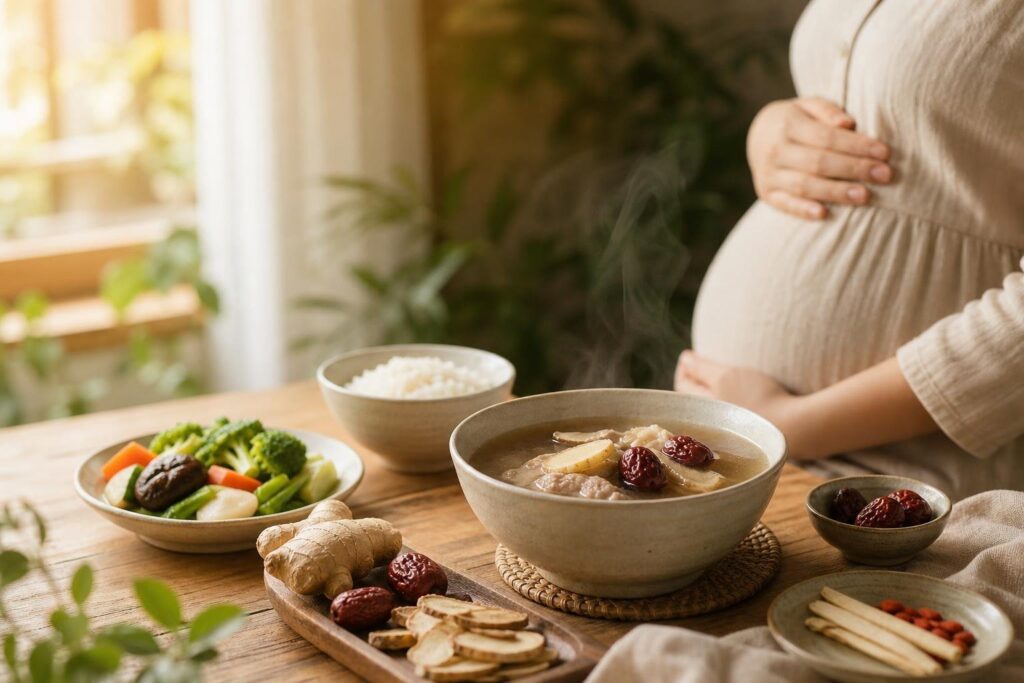
Food is medicine in TCM, and gentle diet advice is one of the safest, most useful parts of pregnancy care. Common guidance includes:
- Favour warm, cooked, easy-to-digest meals over too much cold or raw food.
- Eat regularly to support your energy and steady blood sugar.
- Include nourishing foods like soups, lean protein, and cooked vegetables.
- Go easy on very greasy, spicy, or icy foods if they upset your stomach.
None of this replaces your doctor’s nutrition advice; think of it as a comforting, traditional layer on top.
What a first TCM pregnancy visit looks like
If you have never been to a TCM physician, the first visit is relaxed and conversational. Your physician will ask about your pregnancy, your due date, your symptoms, sleep, digestion, and energy. They may check your pulse and look at your tongue, which are traditional ways of understanding your body’s balance. From there they suggest a gentle plan, which might be acupuncture, simple diet changes, or carefully chosen herbs. Nothing is forced, and you can ask questions about anything before you start.
How often will you need treatment?
It depends on what you are dealing with. For ongoing issues like morning sickness or back pain, a short weekly course of acupuncture often helps, then you taper off as you feel better. For a one-off concern, a few sessions may be enough. Your physician will suggest a plan and adjust it as your pregnancy moves along. There is no fixed number, and you are never locked in.
What to avoid, and combining TCM with your medicine
While much of TCM is gentle, a few things are worth steering clear of during pregnancy:
- Self-prescribed herbs or anyone else’s formula.
- Strong, unlabelled tonics and “detox” or slimming products.
- DIY acupuncture or acupressure on points you are unsure about.
- Skipping antenatal care. TCM supports your pregnancy; it does not replace your gynae, scans, or tests.
As for combining TCM with prescribed medicine, the answer is often yes, but only with both teams in the loop. Tell your TCM physician about any medicines and supplements you take, and tell your doctor about any herbs you are prescribed. This avoids any clash and keeps your care joined up. If your pregnancy is high-risk or closely monitored, check with your doctor before starting herbs in particular.
TCM works alongside your doctor, not instead of it
It helps to set sensible expectations. TCM is good at easing the everyday discomforts of pregnancy and helping you feel more balanced and rested. It is not a treatment for the medical conditions of pregnancy, and it does not replace scans, tests, or your doctor’s advice. Many mums say the biggest benefit is simply feeling listened to and cared for at a time when all the attention is on the baby.
Always contact your doctor or go to hospital for warning signs such as vaginal bleeding, severe or constant tummy pain, a bad headache with vision changes, a high fever, or your baby moving much less than usual. When in doubt, get checked. The best results come when TCM and Western care work together, so keep both teams informed and attend all your antenatal appointments. At Lao Niang TCM, our physicians are experienced in pregnancy care and will always treat gently and within safe limits.
Frequently asked questions
Is acupuncture safe during pregnancy?
For most mums, yes, when it is performed by a trained physician who avoids the points reserved for labour. Always say how many weeks pregnant you are.
Can I take Chinese herbs while pregnant?
Only those prescribed for you by a registered TCM physician who knows you are pregnant. Do not self-prescribe or use unlabelled tonics.
Can TCM help with morning sickness?
Yes. Acupuncture, acupressure, and diet advice are commonly used to ease nausea, and they are gentle. See our first-trimester guide for tips.
Is it too late to start TCM in the third trimester?
No. Many mums start late for back pain, swelling, or labour preparation. Just tell your physician how far along you are.
Does TCM replace my regular pregnancy check-ups?
No. TCM is a supportive add-on. Keep all your antenatal appointments and follow your doctor’s advice.
Want gentle, professional support through your pregnancy? Explore our pregnancy care options and speak to a physician who treats mums-to-be every day.