


You have read the forums, scrolled through the Reddit threads, and maybe even asked a colleague who swears it worked for her. You are ready to try fertility acupuncture, but you have no idea what actually happens when you walk through the door. If the mental image involves lying rigid on a table covered in needles while incense burns somewhere in the background, you are not alone, and you are also wrong.
The gap between “I have heard it helps” and actually booking that first appointment can feel enormous, especially when you are not sure what happens during a session, whether it hurts, or how long a visit takes. This guide walks you through the first-session experience so you know exactly what to expect. For the full multi-cycle fertility programme, see TCM fertility support.
Before the Needles: Your Initial TCM Fertility Consultation
Your first fertility acupuncture session is not what most people picture. The needles come later. The real work begins with a detailed diagnostic consultation that typically runs 30 to 45 minutes, sometimes longer than the acupuncture itself.
Where a gynaecologist focuses on hormone panels, ultrasounds, and ovulation tracking, a TCM physician builds a picture of your body’s internal patterns. Both perspectives have value, and they are not mutually exclusive. Many women in Singapore use acupuncture and TCM alongside their existing medical care.
Pulse Diagnosis: More Than Just Counting Beats
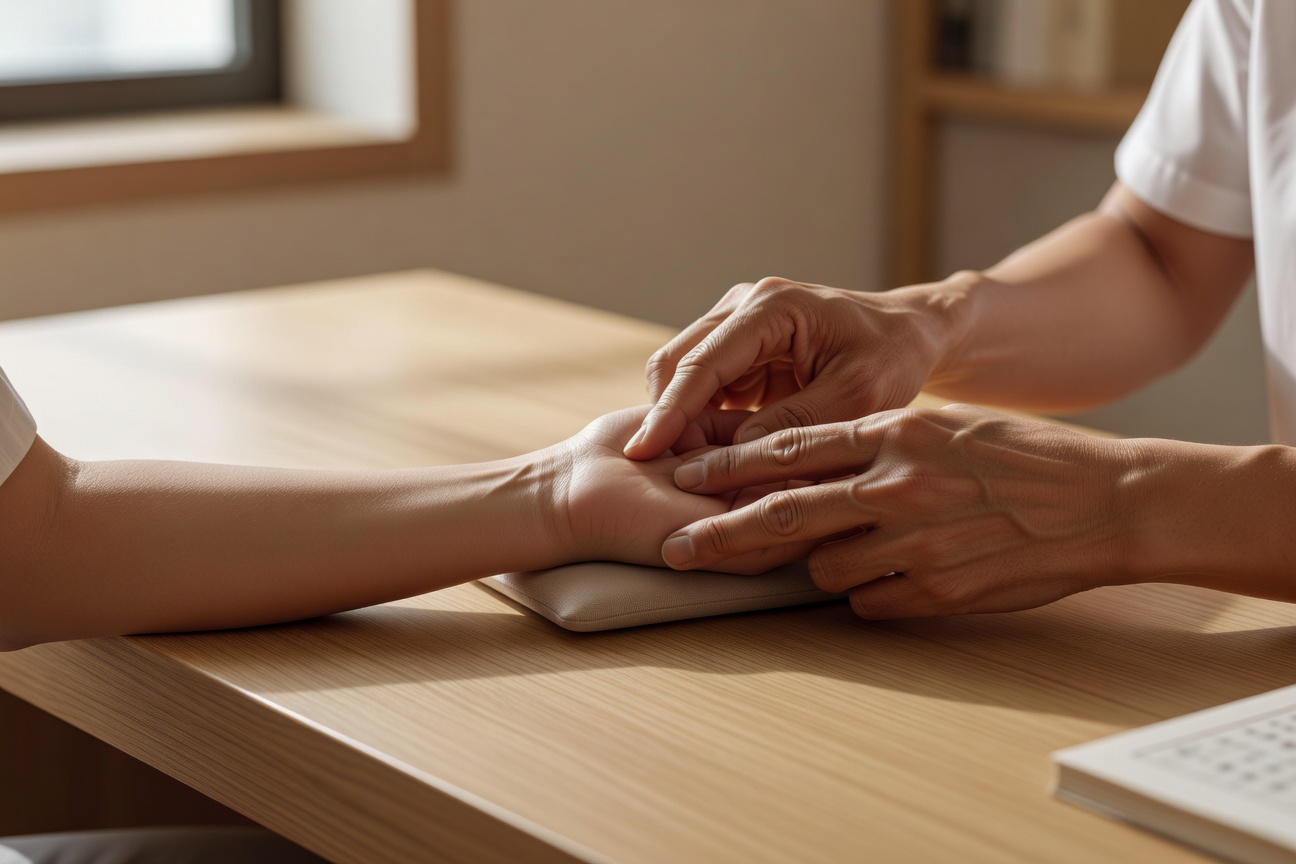
The physician will place three fingers on each of your wrists, pressing at different depths across three distinct positions. This is not a routine pulse check. Each position corresponds to a different organ system: the front position relates to the Heart and Lung, the middle to the Spleen and Stomach, and the rear to the Kidney system, the organ most directly linked to fertility in TCM theory.
Your physician is feeling for qualities like depth, speed, width, and rhythm. A “thin and weak” pulse at the Kidney position might suggest Kidney Qi deficiency, which TCM associates with poor egg development and thin uterine lining. A “wiry” pulse could indicate Liver Qi stagnation, commonly seen in patients with high stress levels or emotional tension around conception. There are over 28 recognised pulse types in classical TCM, and experienced physicians detect subtle shifts that inform the entire treatment strategy.
Tongue Examination: Your Body’s Internal Map
Expect to stick out your tongue under good lighting. The physician examines the tongue body colour, shape, moisture, and coating quality. A pale, puffy tongue with scalloped edges suggests Qi and Yang deficiency. A red tongue with little coating might indicate Yin deficiency with internal heat. Purple spots or dark sublingual veins point toward blood stasis, a pattern frequently seen in women with endometriosis or painful periods.
This is not guesswork. A systematic review in Human Reproduction Update acknowledged that acupuncture and TCM diagnostic methods represent a structured clinical framework used in reproductive medicine across Asia. Tongue and pulse together allow the physician to identify which specific pattern is affecting your fertility, and that pattern determines which acupuncture points are selected, needle depth, and retention time.
The Questions You Will Be Asked
Be prepared for questions that feel surprisingly personal. Your physician needs the full picture, not just your reproductive history:
- How long is your menstrual cycle, and has it changed recently,
- What does your period blood look like: colour, volume, clotting,
- Do you experience pain before, during, or after your period,
- How long have you been trying to conceive,
- Have you had any Western fertility investigations or treatments,
- What is your sleep pattern, and do you wake during the night,
- Do your hands and feet tend to feel cold or warm,
- How would you describe your stress levels and emotional state,
- What does your typical daily diet look like,
- Do you drink cold beverages regularly,
That last question often surprises Singaporean patients. In TCM theory, excessive cold food and drink can impair the Spleen’s ability to transform and transport nutrients and introduce “cold” into the uterine environment. In a climate where iced kopi and cold-pressed juices are daily staples, this is a clinically relevant conversation.
The Acupuncture Treatment: What Actually Happens
Once the consultation is complete and your physician has identified your TCM pattern, you move to the treatment room. Here is a step-by-step breakdown of what the acupuncture portion involves.
Getting Comfortable
You will be asked to lie down on a treatment bed, typically on your back. Wear loose, comfortable clothing that can be easily rolled up past your elbows and knees, since many fertility-related acupuncture points are located on the lower legs, feet, abdomen, lower back, and forearms. Most clinics provide towels or blankets for warmth and modesty.
Needle Insertion: Does It Hurt,
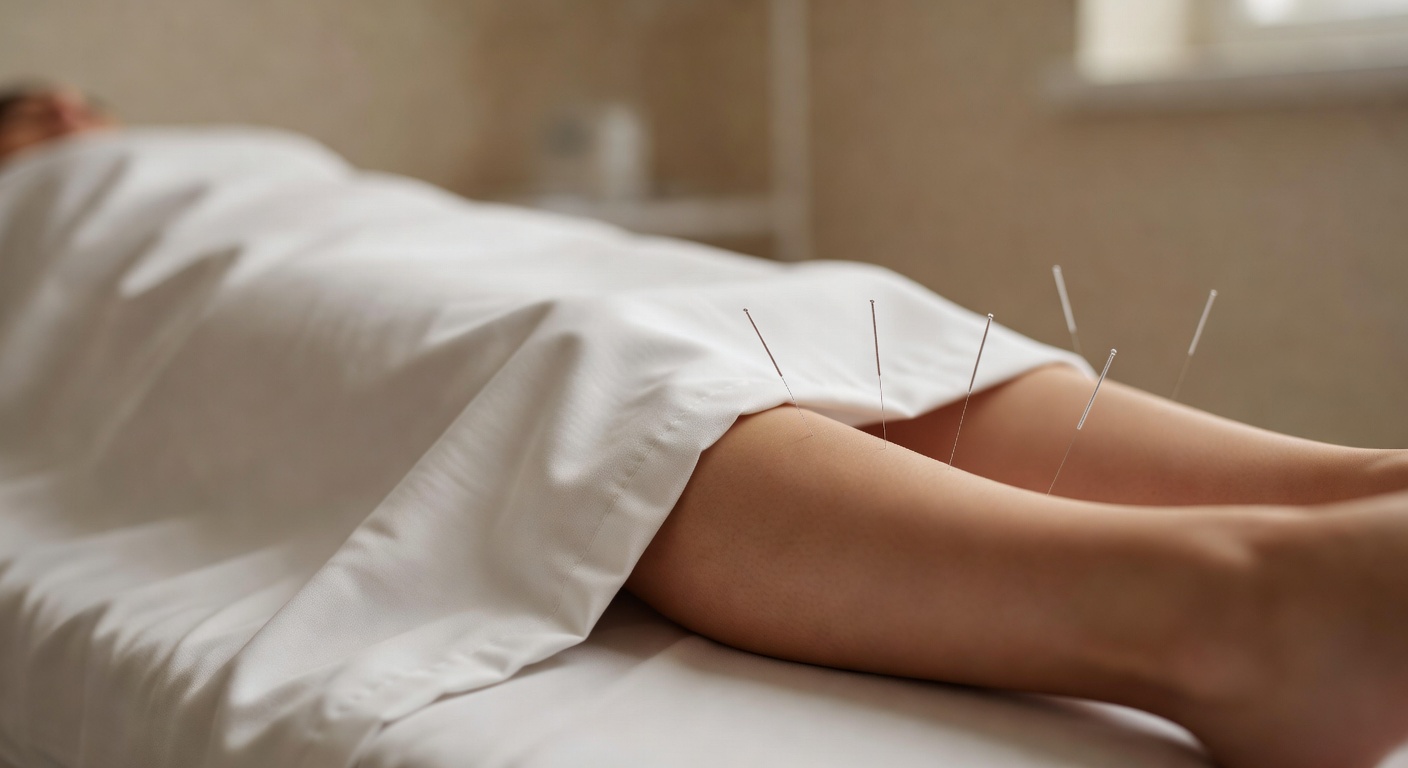
Acupuncture needles are nothing like injection needles. They are hair-thin, typically 0.16mm to 0.30mm in diameter, about four to eight times thinner than blood draw needles. Most patients describe the sensation as a brief pinch or dull ache that fades within seconds.
When the needle reaches the correct depth, you may feel what TCM practitioners call “De Qi,” a sensation of heaviness, warmth, tingling, or a mild ache radiating from the point. This is not pain. It is the therapeutic response your physician is looking for, and many patients come to associate it with the treatment working.
For fertility treatments, expect anywhere from 8 to 20 needles per session, depending on your diagnosis. Common acupuncture points for fertility include:
- Ren 4 (Guanyuan) on the lower abdomen, four finger-widths below the navel, to nourish the uterus and strengthen Kidney Qi
- SP 6 (Sanyinjiao) on the inner lower leg, where the three Yin meridians intersect, widely used for gynaecological conditions
- ST 36 (Zusanli) below the knee, to strengthen Qi and Blood production through the Spleen and Stomach
- KI 3 (Taixi) near the inner ankle, to tonify the Kidney system directly
- LR 3 (Taichong) on the foot, to smooth Liver Qi flow and reduce stress-related stagnation
- Zi Gong (Extra Point) on the lower abdomen lateral to Ren 3, specifically indicated for uterine health
Your physician selects and combines these points based on your specific pattern. A woman with Kidney Yang deficiency receives a different point combination from someone with Liver Qi stagnation and Blood stasis, even though both are seeking fertility support. This individualised approach is central to TCM.
Resting With Needles In Place
Once all needles are placed, you rest quietly for 20 to 30 minutes. The room is typically dim and calm. Many patients fall asleep, which physicians consider a positive sign: it suggests the nervous system is shifting from sympathetic (“fight or flight”) into parasympathetic (“rest and digest”) mode.
Some clinics enhance the treatment with a TDP heat lamp directed at the lower abdomen. This mineral infrared lamp provides gentle warmth that promotes blood flow to the pelvic region. If your diagnosis includes cold patterns (cold hands, pale complexion, watery period blood), the heat lamp may be a standard part of your session.
After the Needles Come Out
Removal is quick and painless. You might notice small red dots at some insertion sites; these fade within hours. After your session, you may feel deeply relaxed, slightly drowsy, or mildly energised. Some women report improved sleep on the night of treatment. Occasionally, a patient may feel lightheaded or emotional, but these responses are normal and short-lived.
How to Prepare for Your First Session
A few practical things to keep in mind before your appointment:
- Eat a light meal beforehand. Do not arrive on an empty stomach. Low blood sugar increases the chance of feeling lightheaded during treatment.
- Avoid caffeine for at least two hours before. Caffeine can make your pulse feel artificially rapid, which may interfere with pulse diagnosis accuracy.
- Bring your medical records. If you have had hormone panels, ultrasound results, or a semen analysis for your partner, bring them. A good TCM physician wants to see the full picture.
- Do not brush your tongue. This sounds odd, but your tongue coating is diagnostically important. Brushing it away before your appointment removes useful clinical information.
- Wear comfortable, loose clothing. Avoid tight jeans or dresses that restrict access to your lower legs and abdomen.
Session Length, Follow-Up Timing, and Cost
Plan roughly 60 to 90 minutes for a first visit: consultation first, then needle placement and 20 to 30 minutes of rest. Follow-up sessions are usually shorter because the physician already has your pattern baseline.
One session is an introduction to the modality, not a full fertility reset. If you continue, physicians often time later visits around cycle phases and may adjust points or herbs as your body responds. That multi-cycle structure, who the programme suits, and how treatment is planned over months live on the TCM natural fertility service page.
A fertility acupuncture session in Singapore typically costs between $80 and $160, depending on the clinic and whether herbal prescriptions are billed separately. TCM practitioners in Singapore must be registered with the Traditional Chinese Medicine Practitioners Board under MOH Singapore. Verify that your physician is licensed before starting treatment. Some corporate insurance plans cover TCM consultations, though acupuncture coverage varies; check with your insurer before your first appointment.
Your Next Step
Walking into your first fertility acupuncture session should not feel intimidating. You now know the diagnostic process, what the needles feel like, which points are commonly used, how to prepare, and roughly what a session costs and how long it runs.
Book a first consultation when you want a clear pattern diagnosis and a calm introduction to acupuncture for fertility support. For the broader multi-cycle programme, booking path, and who it suits, start with TCM fertility support.