

Swollen feet that no longer fit your shoes, a sharp pain shooting down one leg, or a calf cramp that yanks you awake at 3am: the third trimester can be hard on your legs. The good news is that a prenatal massage, a massage gently adapted for pregnancy, can ease a lot of this everyday discomfort. It is not a cure, and some leg symptoms do need a doctor rather than a massage, but for most mums-to-be it brings real relief. Here is how massage helps with swelling, sciatica, and leg cramps, plus simple self-care and the warning signs you must never ignore.
Prenatal massage for swelling and puffy feet
Most mums notice some swelling, especially in the feet, ankles, and lower legs, as pregnancy goes on. The medical word for this fluid swelling is oedema. It happens because your body is carrying much more fluid, and your growing womb presses on the big veins that return blood from your legs. Fluid then pools where gravity takes it: your feet and ankles. It is usually mild, worse by the end of the day, and worse in Singapore’s heat.
How massage helps
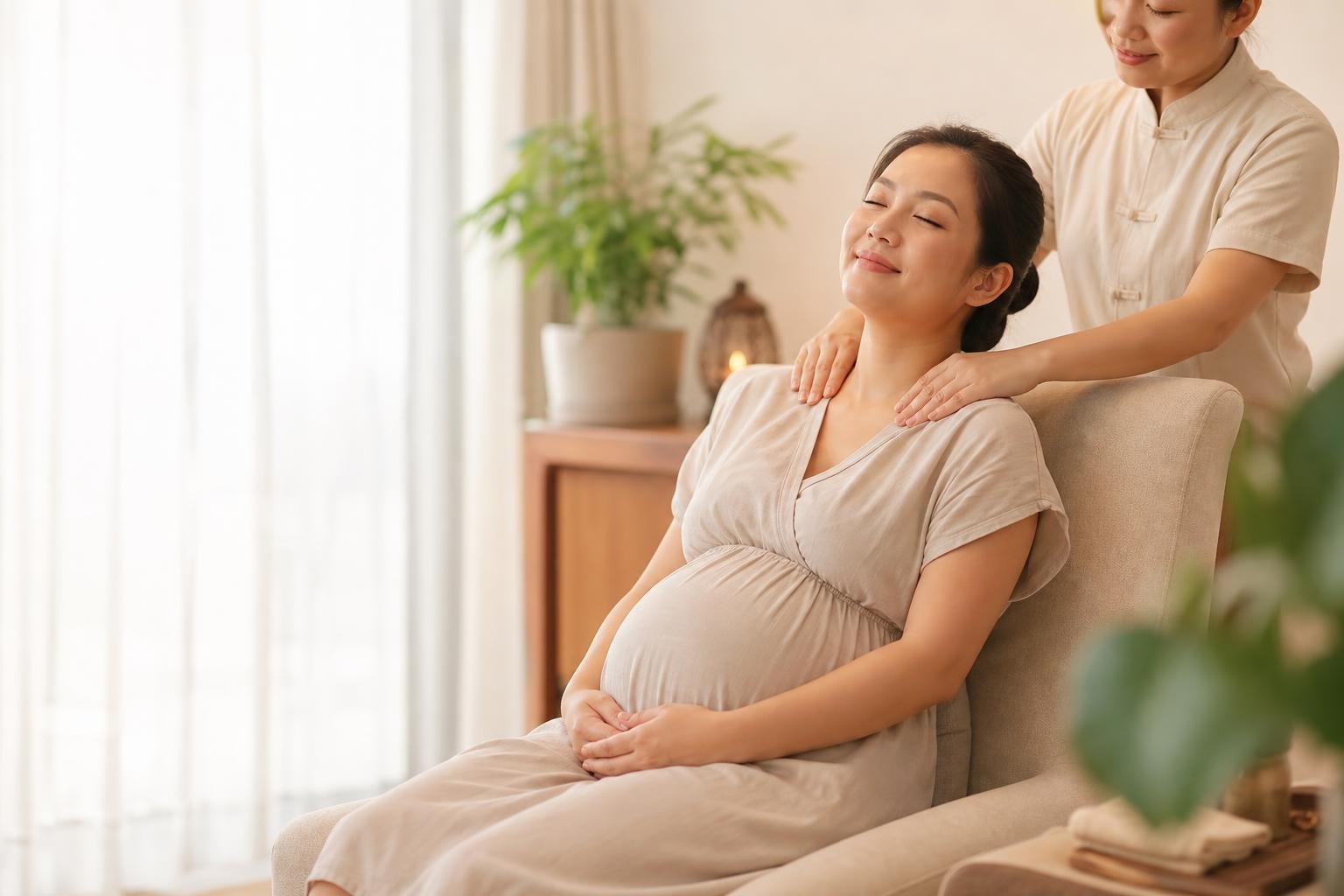
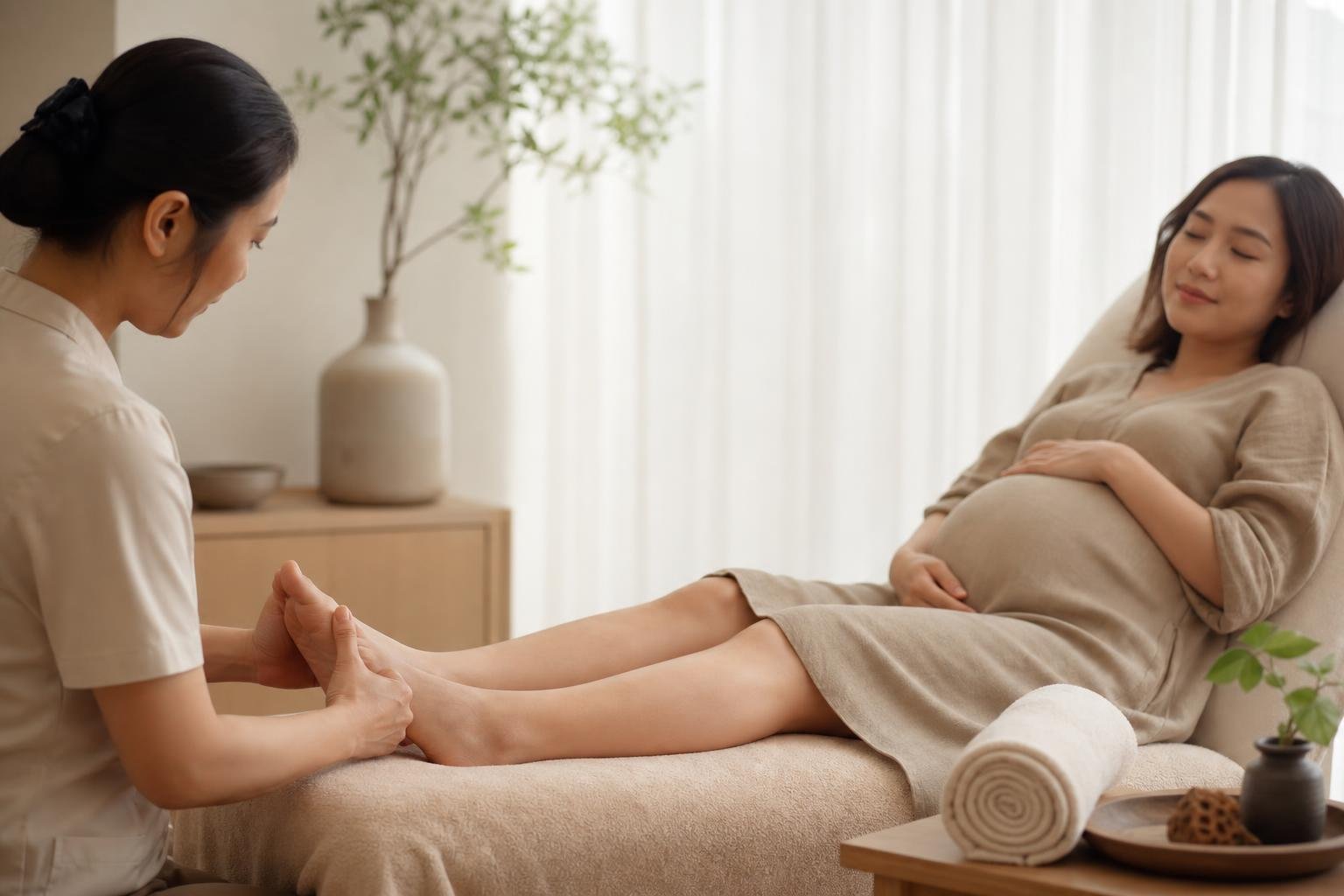
A prenatal massage uses slow, gentle strokes that move fluid out of the puffy areas and back towards the body, where it can drain away. This is sometimes called lymphatic-style work. After a session many mums find their legs feel lighter and less tight, and shoes go on more easily. A prenatal massage also encourages better circulation in tired, heavy legs, which is exactly where pregnancy swelling gathers.
Self-care for swollen feet and ankles
- Put your feet up. Rest your legs on a cushion or stool whenever you sit, ideally above hip level.
- Keep moving. Short, regular walks and gentle ankle circles pump fluid out of your legs.
- Stay cool and hydrated. Drinking plenty of water actually helps your body hold less fluid.
- Avoid standing still for long. Shift your weight, or take a slow walk around.
- Lie on your left side to rest, which takes pressure off the main vein and helps drainage.
Prenatal massage for sciatica and shooting leg pain
Some mums get sciatica, shooting pain down the leg from a pinched or irritated nerve. It can feel like a deep ache, a burning line, or pins and needles running from your lower back or bottom into one leg. In pregnancy this often happens because your growing bump shifts your posture, your hips loosen, and tight muscles in the buttock and lower back press on the nerve.
How massage helps
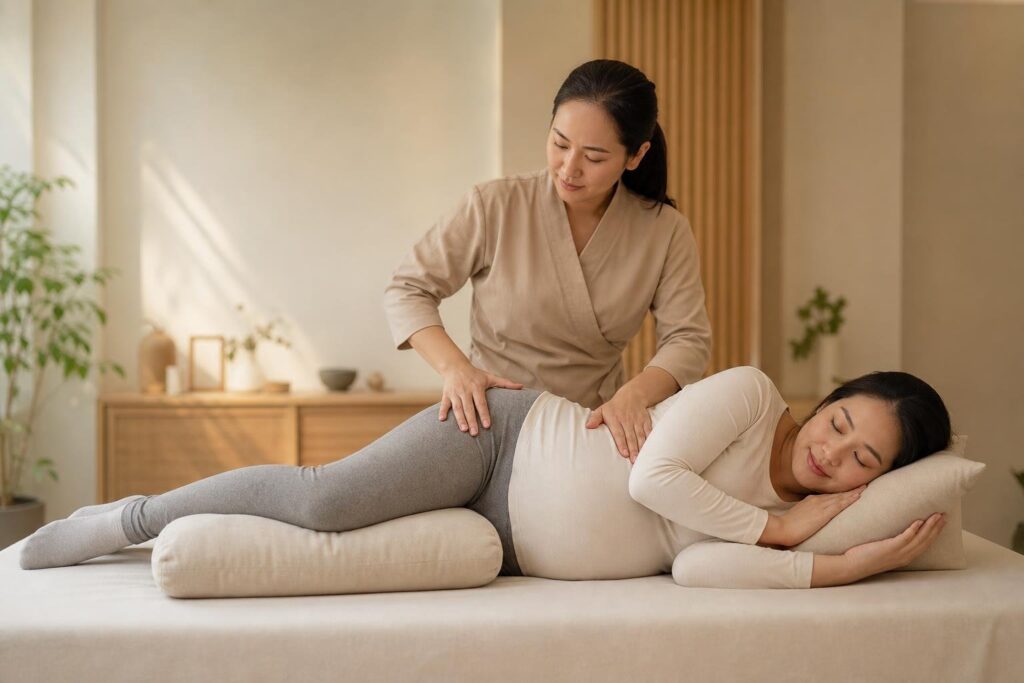
Massage cannot un-pinch a nerve, but it can ease the muscle tightness that often makes sciatica worse. By gently releasing tense muscles around the lower back, hips, and buttock, a therapist can take some of the pressure off the nerve, which reduces the shooting pain and helps you move more freely. Sessions are done in a safe side-lying position so there is no strain on your bump. For ongoing nerve pain, our TCM pregnancy pain management can layer in other gentle, drug-free techniques alongside the massage.
Self-care for pregnancy sciatica
- Warm, not hot. A warm pack on the lower back or buttock can soothe the muscles around the nerve.
- Gentle stretches. Slow hip and lower-back stretches, done within comfort, can ease the pull. Ask your therapist or physiotherapist to show you safe ones.
- Mind your posture. Avoid slouching, and try not to stand with all your weight on one leg.
- Switch sleeping sides and pop a pillow between your knees to keep your hips level.
- Don’t push through sharp pain. Stop any movement that makes the shooting worse.
Prenatal massage for night-time leg cramps
Leg cramps, those sudden, gripping spasms usually in the calf, are very common from the second trimester onwards and love to strike at night. The exact cause is not fully understood, but tired muscles, changes in circulation, and the extra load of pregnancy all play a part. They are harmless but genuinely painful, and they wreck your sleep.
How massage helps
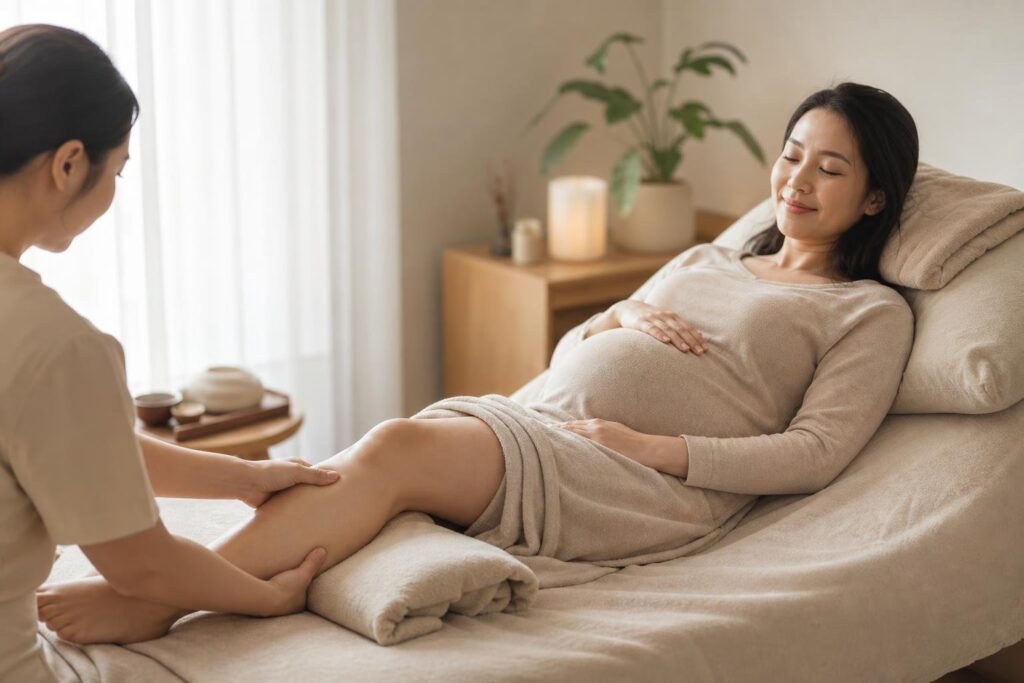
Regular prenatal massage keeps the calf and leg muscles loose and well-supplied with blood, which can make cramps less frequent and less fierce. When a cramp does strike, gently massaging and stretching the muscle is one of the fastest ways to release it. Your therapist can also show you simple calf stretches to do before bed.
Self-care for leg cramps
- Stretch before bed. A gentle calf stretch against the wall most evenings can head off night cramps.
- During a cramp, straighten your leg and pull your toes up towards you, then rub the calf until it releases.
- Stay hydrated and keep moving gently through the day.
- Warm bath or warm pack on the calves before bed can relax tight muscles.
- Ask your doctor whether your diet covers enough of the minerals that support muscle function.
When to see a doctor urgently, not a massage
This is the important part. Most leg swelling and aches in pregnancy are normal, but a few symptoms are red flags that need urgent medical attention. Massage is not the answer for these, and in some cases massage could be harmful. Call your doctor or go to hospital straight away if you have:
- Sudden or one-sided leg swelling or pain, especially if the calf is red, hot, or tender. This can signal a DVT, a blood clot in a deep vein, which is a medical emergency. Do not massage the area.
- Sudden, severe swelling of the face, hands, or around the eyes, particularly with a bad headache, vision changes, or pain under the ribs. These can be signs of pre-eclampsia, a serious rise in blood pressure that needs immediate care.
- Chest pain or breathlessness, which always needs emergency help.
- Any bleeding, strong cramping, reduced baby movements, or a gush of fluid.
If you are ever unsure, get checked first. A trained therapist will also ask about these signs and will not massage you if something needs a doctor’s eye.
Getting the most from your prenatal massage
To stay safe and comfortable, choose a therapist trained in pregnancy massage, and always say how many weeks along you are and what you are feeling on the day. You will be settled on your side or well-propped, never flat on your bump, and the pressure is kept gentle. Many mums book monthly, then more often in the achier final weeks. If you are not sure what each stage involves, our guide to prenatal massage by trimester walks you through how sessions change as your bump grows.
Frequently asked questions
Does prenatal massage really help with swollen feet?
Yes, for everyday pregnancy swelling. Gentle, drainage-style strokes move pooled fluid out of the feet and ankles, so legs feel lighter. It eases comfort rather than treating a medical problem, so see your doctor if swelling is sudden or one-sided.
Can massage cure my pregnancy sciatica?
It will not un-pinch the nerve, but it can ease the tight muscles around it, which often reduces the shooting pain and helps you move more freely. Many mums find regular sessions make a real difference to comfort.
Why do I get leg cramps at night, and can massage stop them?
Night cramps are common in later pregnancy and not dangerous, just painful. Regular massage keeps the leg muscles loose, and gently stretching and rubbing the calf during a cramp helps it release faster.
Is it safe to massage swollen legs in pregnancy?
Gentle massage of normal, mild swelling is generally fine. But never massage a leg that is suddenly swollen on one side, red, hot, or painful, as this could be a blood clot. Get that checked by a doctor first.
When in pregnancy can I start?
Many clinics begin prenatal massage from the second trimester, though it depends on your pregnancy. Always check with your doctor and tell your therapist how far along you are.
How often should I come for leg symptoms?
Many mums go monthly, then weekly or fortnightly in the last trimester when swelling and cramps peak. Your therapist can suggest a rhythm that suits you.
Tired, achy legs slowing you down? Let us help you feel lighter and more comfortable. Book a prenatal massage with a short TCM consultation and get gentle, expert care tailored to your stage of pregnancy.