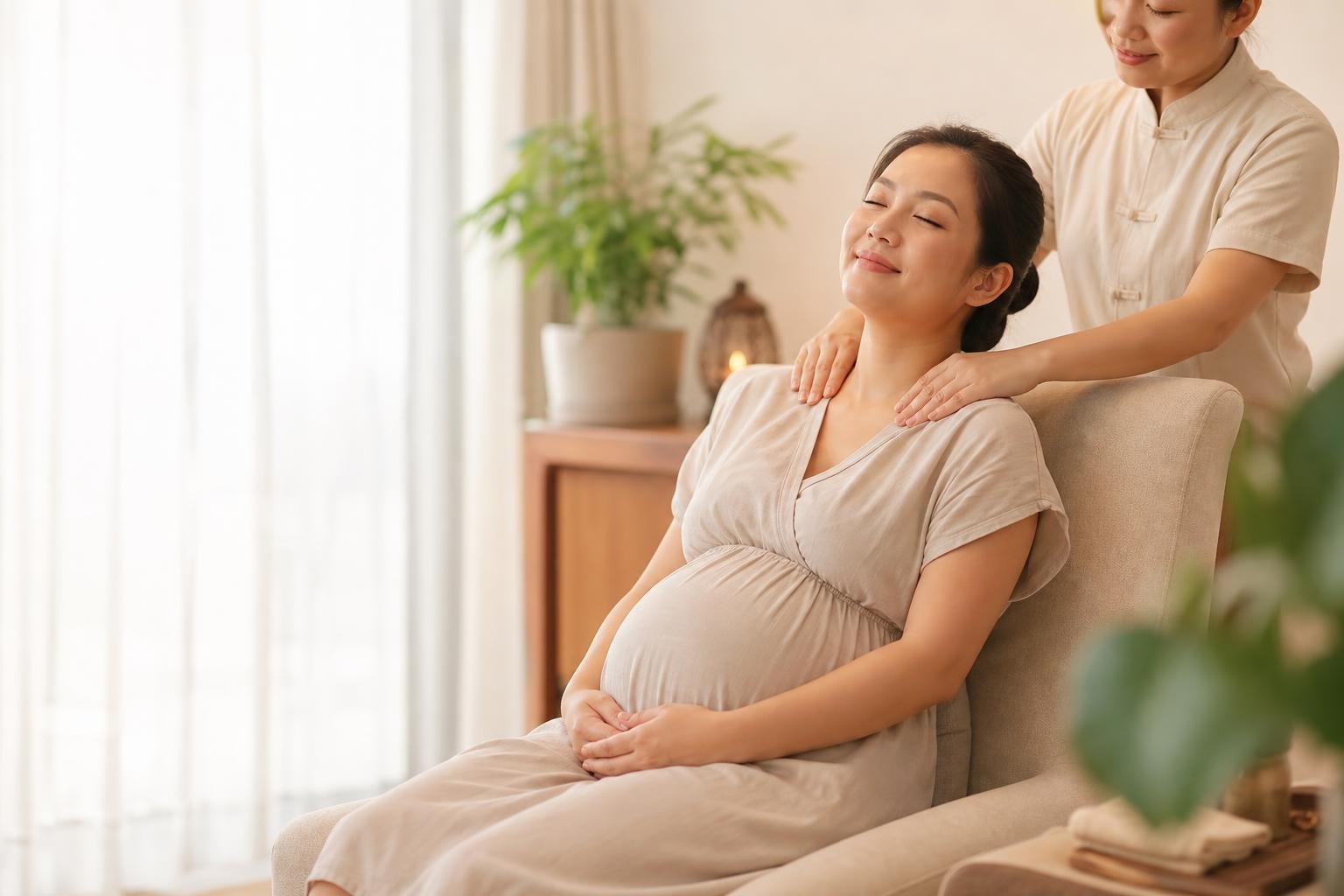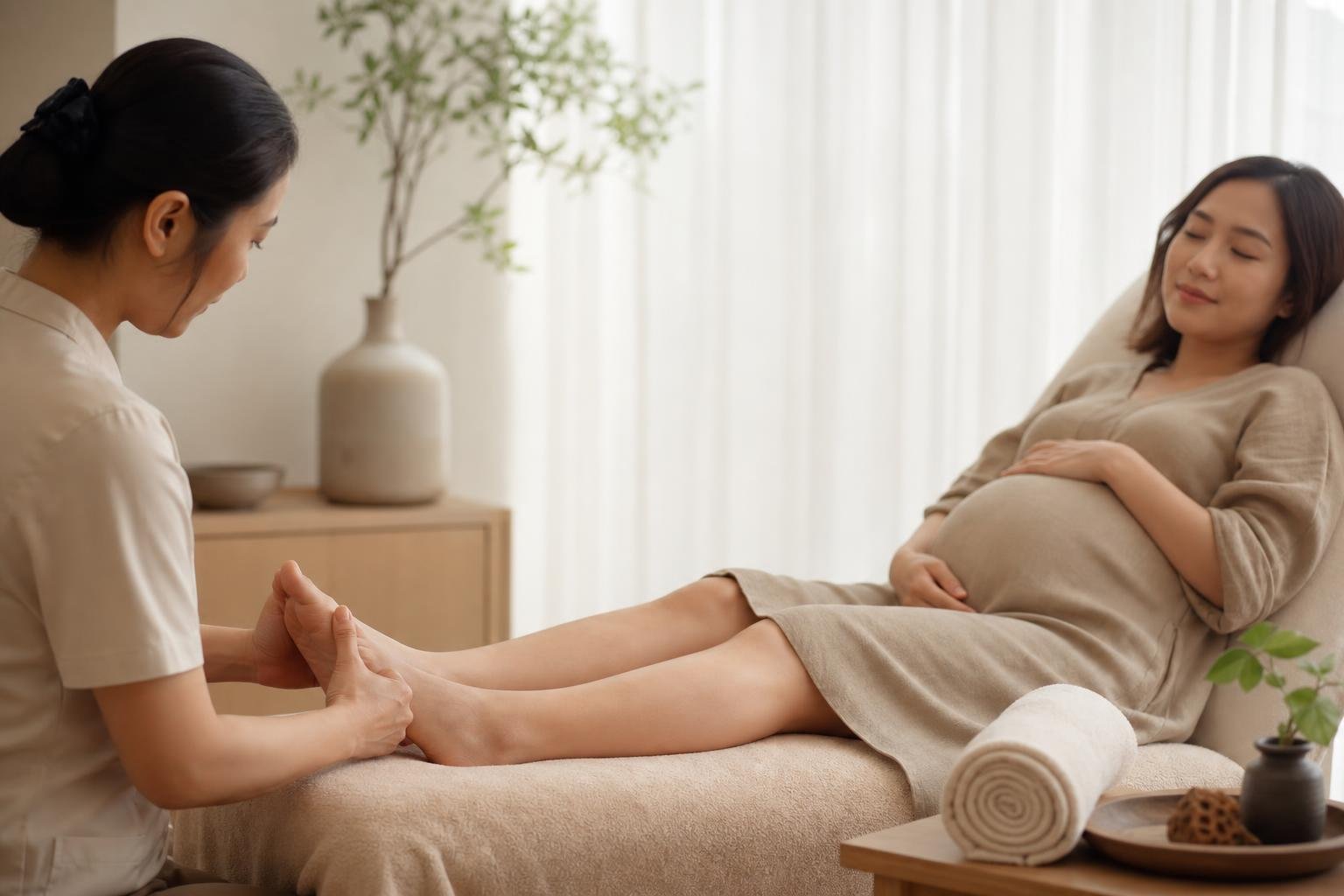


Postnatal massage, often called confinement massage in Singapore, is a gentle full-body massage that helps new mums recover after giving birth. It eases aches, supports better sleep, and helps your body feel like itself again during the tiring early weeks. Here is what it involves, the real benefits, when to start, and what to expect.
What postnatal (confinement) massage is
Confinement is the traditional rest period of about 30 to 40 days after birth, when a new mum focuses on recovering and bonding with her baby. Postnatal massage is a key part of that tradition across Chinese, Malay, and Indian cultures in Singapore. It is a soothing massage designed around a mother’s body after pregnancy and delivery.
Unlike a regular spa massage, a postnatal session is built around recovery: gentler in some areas, and focused on the aches that come from carrying, delivering, and now caring for a newborn. The pace is calm, the pressure is adjusted to how you feel, and the whole session is meant to leave you rested rather than worked over.
The traditional roots of confinement care
Across Asian cultures, the weeks after birth are treated as a special time for a mother to rebuild her strength. Different traditions have their own version, with warming herbal massage, abdominal binding, and “heaty” foods all featuring in one form or another. The shared idea is simple and kind: a new mum has just done something physically huge, and she deserves rest, warmth, and care while her body recovers. Modern postnatal massage keeps that spirit while using safe, gentle techniques.
In Traditional Chinese Medicine, this period is seen as a window to restore qi (energy) and blood circulation after the physical demands of childbirth. Warming techniques are used deliberately, as TCM views the postnatal body as more prone to “cold” and depleted energy that gentle heat and massage can help address.
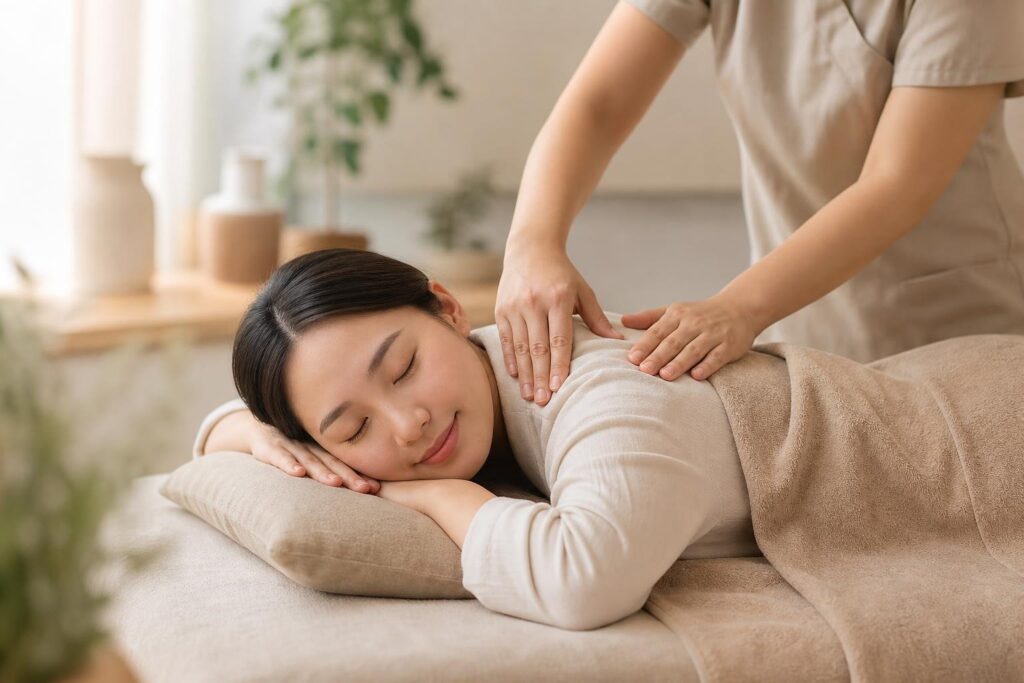
The benefits of postnatal massage
Many mums book postnatal massage to:
- Relieve aches and stiffness in the back, shoulders, neck, and hips from pregnancy, labour, and hours of feeding and carrying.
- Sleep and relax better. Gentle massage calms the body and can lift your mood during a stressful, sleep-short period.
- Ease swelling. Light techniques help the body clear the extra fluid built up during pregnancy.
- Support recovery. Better circulation can help tired muscles and tissues heal.
- Settle tension headaches that come from poor sleep and hunching over to feed.
- Feel cared for. After months of focus on the baby, an hour of rest and care does a new mum a lot of good.
Many packages also include tummy binding (a supportive wrap), which some mums find helps them feel more supported through the core as they move around in the early weeks.
When will you feel the benefit?
Many mums feel lighter and less achy straight after the first session, and notice better sleep that night. The bigger benefits, such as steadier energy, less stiffness, and feeling more like yourself, tend to build over a series of sessions across the confinement weeks. Recovery is not a race, so go at the pace your body sets.
Rest and food matter too
Massage works best as part of a wider confinement routine: plenty of rest, warm and nourishing meals, gentle movement once you feel able, and accepting help with chores and night feeds. Think of massage as one supportive piece, a way to ease the physical toll, rather than the whole answer. The more you let yourself rest, the more good it does.
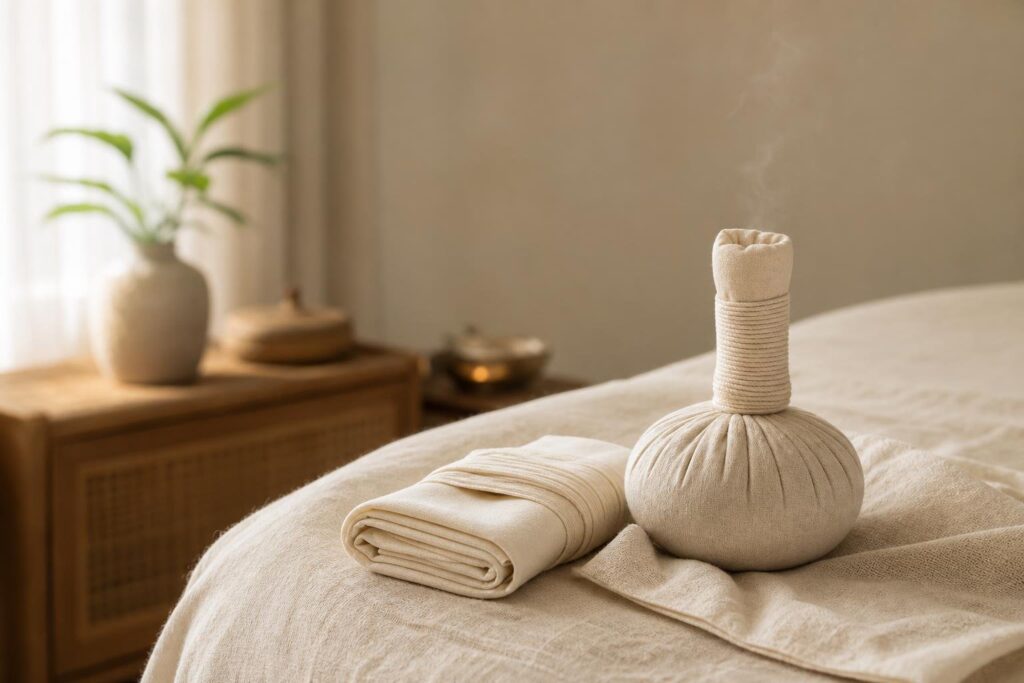
What is included and what to expect
A typical confinement massage package combines a few elements:
- Full-body massage focusing on the back, shoulders, hips, and legs.
- Warming herbal oil or compress, in the TCM tradition, to soothe tired muscles and aid circulation.
- Gentle abdominal massage, done carefully and only when it is comfortable for you.
- Tummy binding with a cloth or band, if you choose it.
A typical home or clinic session lasts around 60 to 90 minutes. Your therapist will ask about your delivery, any pain, and how you are healing, then use warm, gentle strokes over your back, shoulders, arms, legs, and (carefully) your tummy. Most mums feel relaxed, lighter, and less achy afterwards, and many sleep better that night.
How to get the most from your sessions
- Have a warm shower beforehand and wear loose, comfortable clothing.
- Feed your baby just before the session so you are more comfortable and less likely to be interrupted.
- Keep water nearby and rest afterwards.
- Tell your therapist about any sore spots, your stitches, or your C-section so they can adapt.
Home visit or clinic?
Both work well; it comes down to convenience. Home visits save you from travelling with a newborn, let you feed and settle the baby in between, and keep you in your own comfortable space. Most confinement massage in Singapore is done this way. Clinic visits can be a nice break if you have help at home and would enjoy stepping out for an hour of quiet. If you choose home visits, just make sure there is a comfortable, firm surface to lie on and a little space for the therapist to work.
When to start and how many sessions
Timing depends on your delivery:
- Natural (vaginal) birth: many mums start around 5 to 7 days after delivery, once they feel up to it.
- Caesarean (C-section): it is best to wait longer, usually 3 to 4 weeks, or until your wound has healed and your doctor is happy for you to have a massage.
There is no single “right” day. The key is that you feel ready and have no complications. Most mums book a package of several sessions spread over the confinement period, for example a daily or alternate-day session across one to two weeks. The number is up to you, your budget, and how your body feels. Even a few sessions can make the early weeks more comfortable.
How to choose a provider
A few simple checks help you pick well:
- Trained, experienced therapists who work specifically with postnatal mums.
- Clear advice on timing, especially after a C-section.
- Willingness to adjust pressure and avoid sensitive areas.
- Good hygiene and clean equipment, particularly for home visits.
- Honest packages with no pressure to buy more than you need.
Safety, and how it differs from lactation massage
For most healthy mums, postnatal massage is safe when it is done by a trained therapist using gentle techniques. Tell your therapist if you had a C-section, stitches, high blood pressure, or any complications, so they can adjust. Hold off and check with your doctor first if you have heavy bleeding, an infected or unhealed wound, a blood clot, or any condition your doctor is monitoring.
It also helps to know that postnatal massage and lactation massage are different and solve different problems:
- Postnatal massage is a full-body massage for overall recovery, aches, and relaxation.
- Lactation massage focuses on the breasts to ease engorgement, clear blocked ducts, and support milk flow.
Many mums benefit from both during confinement: recovery for the body, plus targeted help if breastfeeding feels uncomfortable.
How Lao Niang TCM supports your recovery
Our postnatal massage blends gentle massage with traditional Chinese techniques and warming herbal care to help you rest, recover, and feel stronger through confinement. We come to you, work around your baby’s schedule, and tailor every session to how you delivered and how you feel. You can read more about looking after yourself in the postpartum period on our site.
Frequently asked questions
What is the difference between confinement massage and postnatal massage?
They are the same thing. “Confinement massage” is the local name used in Singapore for postnatal massage during the confinement period.
Can I have a massage after a C-section?
Yes, but wait until your wound has healed, usually around 3 to 4 weeks, and get your doctor’s okay first. Your therapist will avoid the wound area.
Does postnatal massage help with weight or the tummy?
Massage and binding can help you feel more supported and comfortable, but they are not a weight-loss treatment. Gentle recovery, good food, and time do the real work.
Can I still have it if I am formula feeding?
Yes. Postnatal massage is about your body’s recovery and is helpful whether you breastfeed, formula feed, or do both.
Do I need to prepare anything for a home session?
Not much: a clean, comfortable spot to lie down, a couple of towels, and somewhere for the therapist to set up. Your provider will tell you if they need anything specific.
Is tummy binding necessary?
No, it is optional. Some mums find it supportive while moving around; others skip it. Do what feels comfortable for you.
How soon after birth is too soon for a massage?
For a vaginal birth, the first few days are usually about resting; many mums start around day 5 to 7. After a C-section, wait until the wound has healed, usually 3 to 4 weeks, and check with your doctor first.
Can I have postnatal massage if I had twins?
Yes. Recovery after twins can be especially tiring, so gentle postnatal massage is often very welcome. Just tell your therapist how you delivered and how you are feeling.
Ready to rest and recover? Book your postnatal massage and let us take care of you during confinement.