


First Trimester vs Third Trimester: How Prenatal Massage Changes Throughout Your Pregnancy
Your body at six weeks pregnant is nothing like your body at thirty-six weeks. The aches are different, the risks are different, and the way a skilled therapist works on your muscles, joints and meridians should be different too.
Yet most guides treat prenatal massage as a single, static experience. In practice, every trimester calls for a distinct approach, different positioning, varying pressure levels, and in Traditional Chinese Medicine (TCM), entirely different energetic priorities.
When to Start Prenatal Massage: The First Trimester Question
Why Most Practitioners Wait
If you have searched “prenatal massage first trimester,” you have probably found conflicting advice. Here is the clinical reasoning behind the caution.
During weeks 1 through 12, the embryo is implanting and the placenta is forming. Hormone levels shift dramatically, and the risk of miscarriage is statistically highest in this window. While massage itself has not been proven to cause miscarriage, and research on massage therapy during pregnancy has shown positive effects on stress hormones and birth outcomes, most practitioners, including our team, prefer a conservative approach during this period.
In TCM, the first trimester is governed by what we call “gathering Qi.” The body directs energy inward to secure the pregnancy. Overstimulating certain acupressure points, particularly Spleen 6 (SP6) near the inner ankle and Large Intestine 4 (LI4) between the thumb and index finger, is traditionally contraindicated because these points can promote downward movement of Qi.
What Is Safe in the First Trimester
This does not mean you must avoid all forms of self-care or relaxation during weeks 1 through 12. The first trimester is a delicate time when the embryo is implanting, the placenta is forming, and hormone shifts are dramatic. Miscarriage risk is statistically highest in this window, so most TCM practitioners, including our team at Lao Niang TCM, adopt a conservative approach and do not recommend prenatal massage during the first trimester.
In TCM theory, the early weeks are focused on “gathering Qi” — directing energy inward to secure and nourish the pregnancy. Stimulating certain areas or points (such as those that move Qi downward) could theoretically disrupt this process, even if no direct evidence links gentle massage to miscarriage. To prioritize safety, we advise waiting until after the first trimester.
What You Can Do Instead in the First Trimester
If you’re dealing with tension headaches, upper back stiffness, or general stress, consider these gentler, non-massage options:
- Light self-massage or acupressure on safe upper-body areas (shoulders, neck, scalp) — but only if guided by your TCM physician or obstetrician.
- Restorative practices like gentle walking, meditation, or breathing exercises to support relaxation without physical stimulation.
- Herbal teas or simple dietary adjustments (e.g., warming foods to support Qi) as recommended by your practitioner.
The American College of Obstetricians and Gynecologists (ACOG) recommends discussing any bodywork or physical therapy with your healthcare provider, especially in the first trimester. If you have a history of recurrent miscarriage, are undergoing assisted reproduction, or have any high-risk factors, consult your obstetrician before considering any form of massage or TCM treatment during early pregnancy.
Second Trimester: The Ideal Window to Begin
Why Weeks 13 to 27 Are the Sweet Spot
By the second trimester, the placenta is well established, morning sickness often subsides, and energy levels tend to recover. This is when most women begin their prenatal massage journey, and for good reason.
Your body is now adapting to a shifting centre of gravity. The growing uterus pulls the pelvis forward, creating increased lordosis (the inward curve of the lower back). Hip flexors tighten, the piriformis muscle deep in the buttock can compress the sciatic nerve, and round ligament pain becomes common along the sides of the abdomen.
How Massage Adapts in the Second Trimester
A skilled prenatal therapist will now focus on:
- Lower back and sacrum: Releasing the muscles compensating for postural shifts
- Hips and glutes: Addressing piriformis tension before it develops into sciatic pain
- Legs and calves: Improving circulation as blood volume increases by up to 50%
- Shoulders and upper back: Counteracting the forward pull from growing breast tissue
From a TCM perspective, the second trimester shifts focus to nourishing Blood and supporting the Spleen and Stomach meridians. Digestion-related discomfort, bloating and fatigue respond well to gentle acupressure along the Stomach channel running down the front of the leg. Your practitioner may also incorporate work along the Kidney meridian to support the lower back and sustain energy levels.
Positioning in the Second Trimester
Side-lying position typically begins during this stage, using bolsters and pillows to keep the spine neutral and the belly supported. Some women can still lie face-up briefly with a slight left-side tilt (to avoid compressing the vena cava), but as the bump grows, full supine positioning is phased out.
Recommended Frequency
For most women in the second trimester, fortnightly sessions (once every two weeks) provide consistent relief without overdoing it. Women experiencing significant sciatic or pelvic girdle pain may benefit from weekly sessions during flare-ups.
Third Trimester Massage: Preparing the Body for Labour
The Unique Challenges of Weeks 28 to 40
A systematic review and meta-analysis found that massage therapy during pregnancy significantly reduces anxiety and depression in pregnant women, with additional benefits for stress relief and overall well-being (Hall et al., 2020). The third trimester brings the most dramatic physical demands. The baby is gaining weight rapidly, the pelvis is widening under the influence of relaxin, and sleep quality often plummets due to discomfort and frequent urination.
Swelling in the feet and ankles can intensify, carpal tunnel symptoms may appear as fluid retention affects the wrists, and Braxton Hicks contractions become more frequent. Every aspect of massage must account for these realities.
How Techniques Change in the Third Trimester
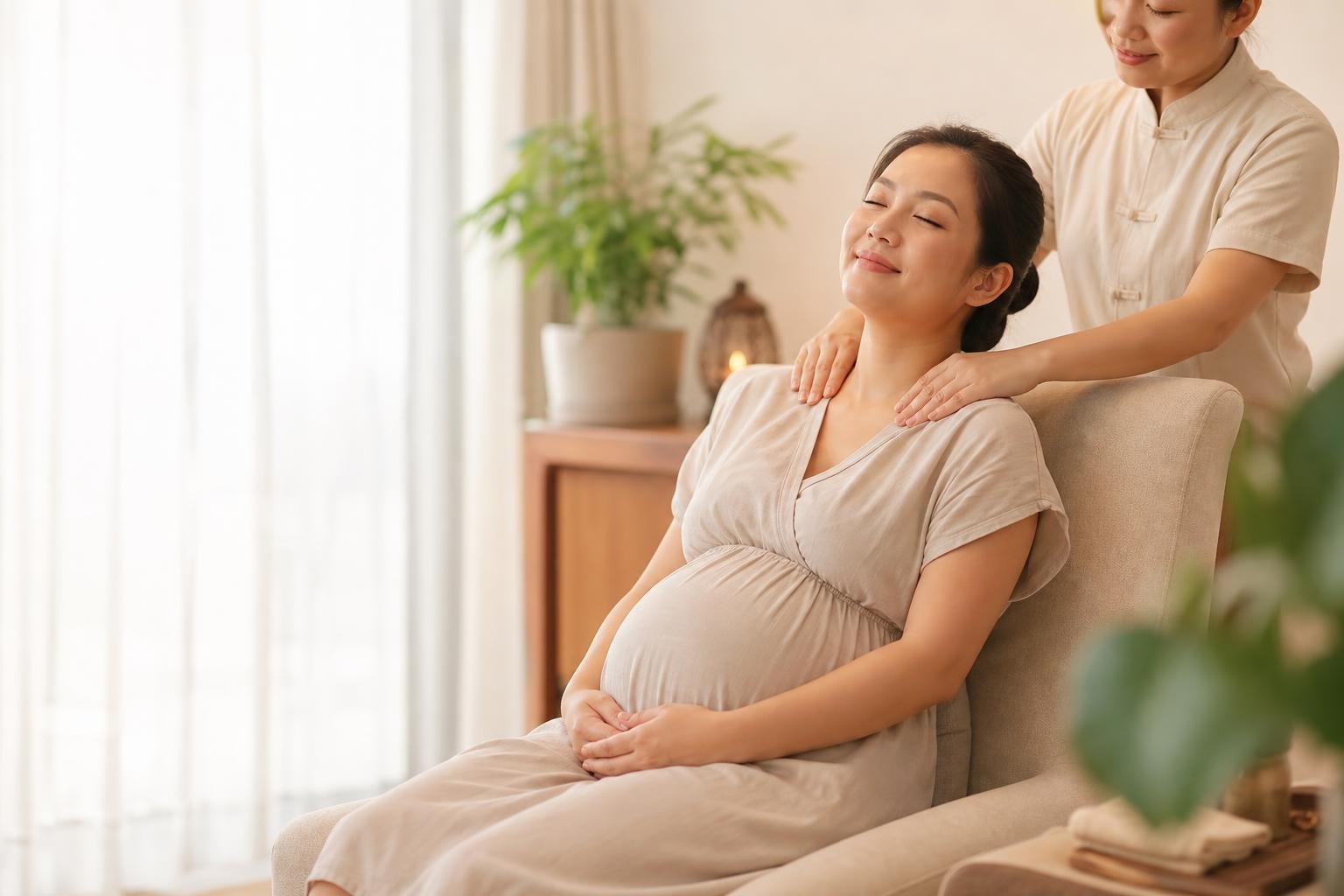
Positioning becomes critical. By the late third trimester, side-lying is the only safe position. Your therapist will use a careful arrangement of pillows between the knees, under the belly and behind the back to keep you comfortable. Sessions may include more frequent position changes as staying on one side for too long can become uncomfortable.
Pressure is recalibrated. Joints are more lax due to relaxin, so deep tissue work on the hips and pelvis requires extra care. Conversely, the upper back and shoulders, which are bearing significant load, can often tolerate firmer pressure than earlier in pregnancy.
Focus areas shift. Third trimester massage prioritises:
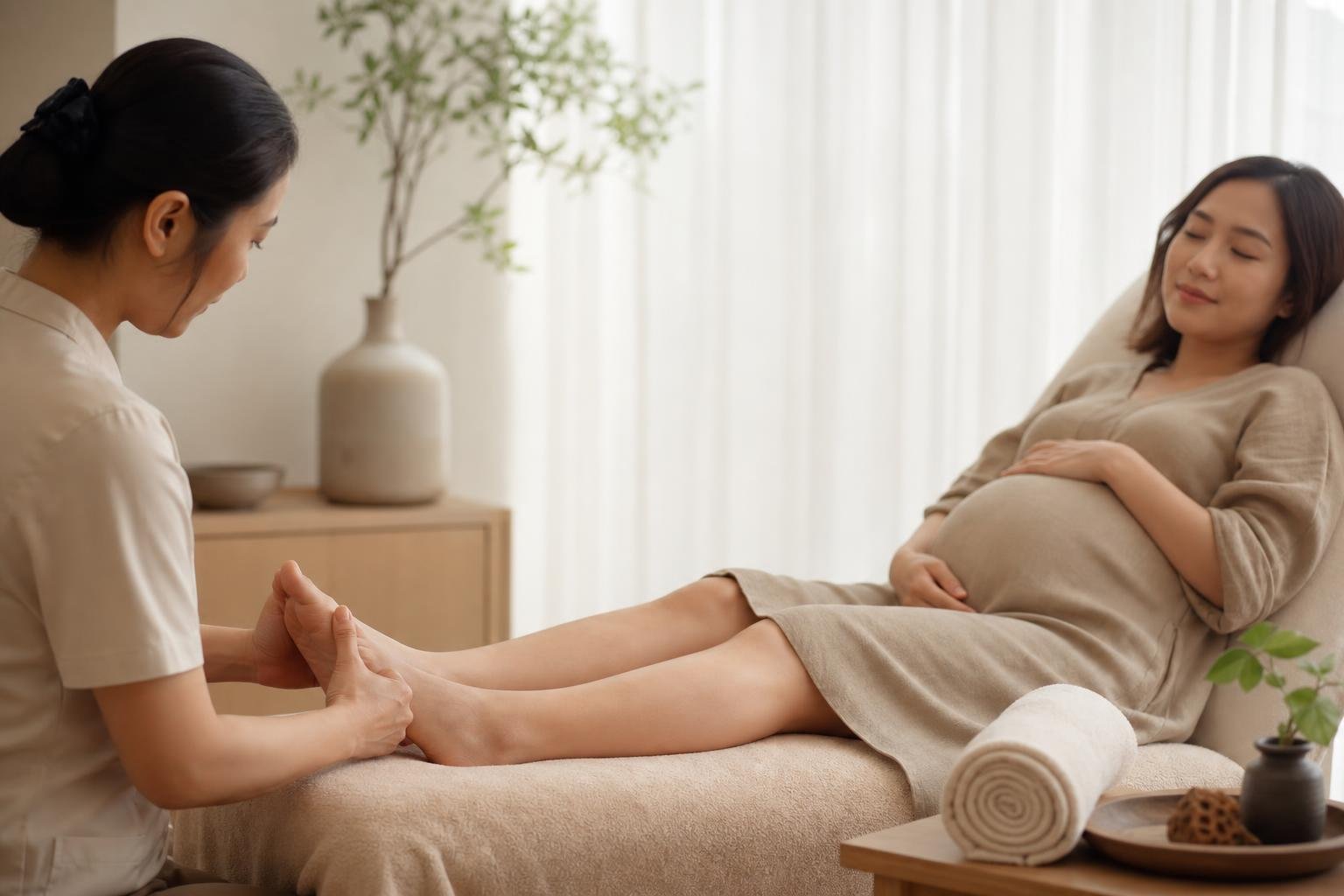
- Feet and ankles: Gentle lymphatic drainage techniques to manage swelling
- Lower back and pelvis: Supporting the sacroiliac joints as they loosen
- Hands and wrists: Relieving carpal tunnel pressure from fluid retention
- Inner thighs and pelvic floor area (external): Releasing tension in preparation for labour
The TCM Approach in the Third Trimester
In TCM theory, the third trimester is about facilitating the downward movement of Qi in preparation for birth. This is a reversal from the first trimester, where we actively avoided stimulating downward energy.
After 37 weeks (full term), practitioners may gently incorporate acupressure points that were previously off-limits. Points like SP6 and Gallbladder 21 (GB21) at the top of the shoulder can now be used strategically to help prepare the body for labour. This is one of the clearest examples of why trimester-specific knowledge matters: the same point that is contraindicated at 8 weeks may be therapeutically valuable at 38 weeks.
Your practitioner may also focus on the Liver meridian during the final weeks. In TCM, the Liver governs the smooth flow of Qi, and supporting this channel can help the body transition more smoothly into labour.
Recommended Frequency
Weekly sessions during the third trimester are common, particularly from week 34 onward. Women aiming to use acupressure for labour preparation often increase to twice weekly in the final two to three weeks, though this should always be guided by your practitioner and obstetrician.
Red Flags: When to Pause or Stop Prenatal Massage
Knowing when to hold off is as important as knowing when to begin. Pause your session and consult your healthcare provider if you experience any of the following:
First Trimester:
- Vaginal bleeding or spotting
- Severe abdominal cramping
- Your obstetrician has identified a high-risk pregnancy
Second Trimester:
- Signs of preterm labour (regular contractions before week 37)
- Sudden severe headache with visual changes (possible pre-eclampsia)
- Unexplained vaginal bleeding
Third Trimester:
- All of the above, plus:
- Sudden, significant swelling in the face or hands (another pre-eclampsia warning sign)
- Reduced foetal movement
- Rupture of membranes (waters breaking)
- Placenta praevia diagnosed on ultrasound
At Lao Niang TCM, we require all prenatal massage clients to provide clearance from their obstetrician or gynaecologist if they have been flagged as high-risk. Safety is never negotiable.
A Summary of Pregnancy Massage Stages
| First Trimester | Second Trimester | Third Trimester | |
|---|---|---|---|
| Typical start | Not recommended — wait until after Week 12–13, or as cleared by your gynaecologist | Week 13 onward | Continues from second trimester |
| Positioning | N/A — no massage sessions | Side-lying with bolsters | Side-lying only |
| Pressure | N/A — no massage sessions | Light to moderate | Moderate (adjusted per area) |
| TCM focus | Gathering Qi; strictly avoid stimulation of downward-moving points | Nourish Blood, Spleen/Stomach | Facilitate descent, Liver Qi flow |
| Key areas | N/A — focus on rest & gentle self-care if approved | Lower back, hips, legs | Pelvis, feet, wrists, labour prep |
| Frequency | Not recommended | Fortnightly | Weekly to twice weekly |
| Contraindicated points | SP6, LI4, GB21 — strictly avoided; no acupressure involving these | SP6, LI4, GB21 | SP6 & GB21 may be used after Week 37 |
Frequently Asked Questions
Can I get a prenatal massage in my first trimester in Singapore?
No, at Lao Niang TCM we do not recommend or provide prenatal massage during the first trimester (weeks 1–12). This is a conservative approach shared by many registered TCM clinics in Singapore due to the higher natural risk of miscarriage during early pregnancy and TCM principles of “gathering Qi” to support implantation and placental development. Stimulating certain areas or points could theoretically interfere with this delicate process, even if no direct evidence links gentle massage to miscarriage.
We strongly advise waiting until after your first ultrasound confirms a viable pregnancy and ideally into the second trimester (week 13 onward), when the pregnancy is more stable. If you’re experiencing tension headaches, upper back stiffness, or general stress in the early weeks, speak to your obstetrician or a TCM physician about safe, non-massage alternatives (such as gentle self-acupressure on upper body points, breathing exercises, or restful practices). Always consult your gynaecologist before considering any form of bodywork during early pregnancy, especially if you have a history of miscarriage or are undergoing fertility treatment.
How does TCM prenatal massage differ from a regular prenatal massage?
A TCM-trained practitioner considers your pregnancy through the lens of meridian theory and Qi flow, not just musculoskeletal anatomy. This means the points selected, the direction of massage strokes, and the areas of focus change with each trimester based on your body’s energetic needs. A conventional prenatal massage focuses primarily on relieving muscle tension without this additional framework.
Is it safe to have a massage in the last month of pregnancy?
For uncomplicated pregnancies, massage in the final month is not only safe but often recommended. After week 37 (full term), your practitioner can incorporate acupressure techniques that may support your body’s preparation for labour. However, if you have been diagnosed with placenta praevia, pre-eclampsia or are at risk of preterm labour, you should avoid massage unless your obstetrician explicitly approves it.
How often should I get a prenatal massage as my due date approaches?
Most women find weekly sessions beneficial from week 34 onward. In the final two to three weeks, some clients at our Novena clinic increase to twice weekly, particularly if they are incorporating acupressure for labour preparation. Your practitioner will recommend a schedule based on your individual needs and any guidance from your medical team.
What should I tell my therapist before each session?
Always update your therapist on your current week of pregnancy, any new symptoms or complications, changes flagged by your obstetrician, and how you have been feeling since your last session. This information allows your practitioner to adjust techniques, pressure and point selection for that specific visit.
Book Your Trimester-Appropriate Prenatal Massage
Every stage of pregnancy deserves a massage approach designed for that stage. At Lao Niang TCM, our MOH-registered practitioners, led by Physician Chen Ying Chu (Cora), Council Member of the Singapore Chinese Physicians’ Association, tailor every session to your current trimester, your body’s needs, and your baby’s safety.
Ready to experience the difference that trimester-specific care makes? View our prenatal massage services, pricing and therapist credentials to book your session at our Novena clinic.
Lao Niang TCM is located in Novena, Singapore. All prenatal massage services are provided by MOH-registered TCM practitioners. This article is for informational purposes and does not replace medical advice from your obstetrician or gynaecologist.